Beyond the Booking Button: Why India’s Next Big Travel Platform Starts with People, Not Destinations
In a market dominated by transactional travel apps, one Delhi startup is betting that community comes before commerce—and 500+ travelers on their waitlist suggest they might be right
Open any travel app in India and you’ll find the same thing: a search bar asking where you want to go. Destination first. Dates second. Payment third. Transaction complete.
It’s a model that’s generated billions for MakeMyTrip, Cleartrip, and a dozen others. It’s also a model that’s fundamentally broken for how young Indians actually want to travel.
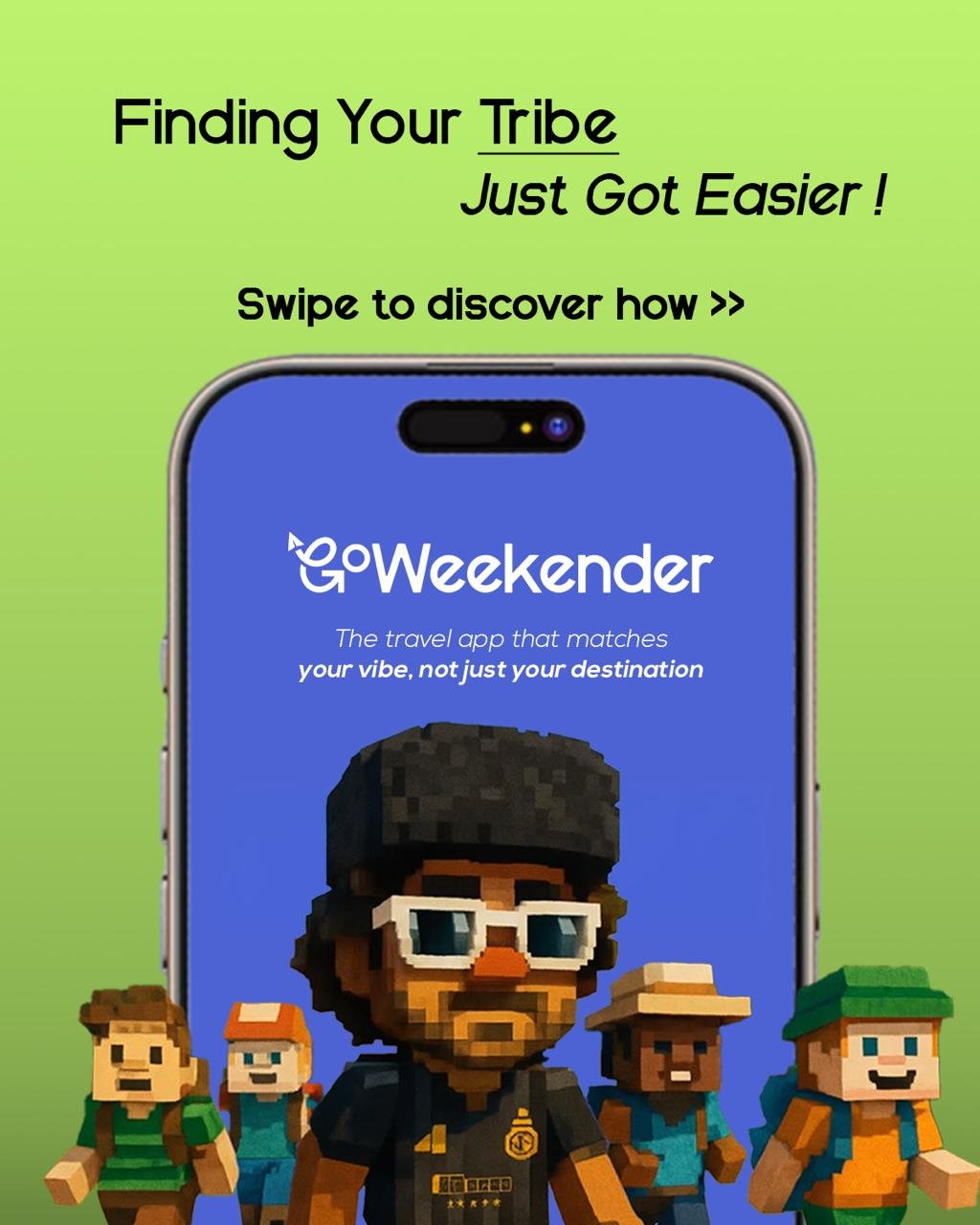
GoWeekender, a Delhi-based startup, is building something different: a platform where the first question isn’t “where do you want to go?” but “who do you want to travel with?”
It sounds like a subtle shift. It’s actually a complete inversion of how travel platforms work.
The Transactional Trap
India’s online travel market is projected to hit $125 billion by 2027, with 60% of revenue coming through digital channels by 2029. The incumbents have won the booking war. But they’ve lost something in the process.
Ask any millennial about their last trip planned via travel app and they’ll describe a sterile experience: compare prices, click book, receive confirmation email. Ask them about their best trip, and they’ll tell you about the people—the strangers who became friends at a Kasol bonfire, the couple they met trekking to Triund who now join every adventure.
Existing platforms will help you book a flight. They won’t help you find the people who’d make that flight worth taking.
Community as Infrastructure
GoWeekender’s bet is that community isn’t a feature—it’s the foundation. Before a single booking happens, travelers on the platform complete what the company calls a ‘Vibe Check’: an AI-powered personality assessment mapping travel style, budget preferences, pace, and interests.
The output isn’t a hotel recommendation. It’s a match with compatible travelers—verified through ID checks and background screening—who form ‘Tribes’ of 3-15 people ready to explore together. Solo travelers find companions. Couples discover other couples for double-date adventures. Friend groups expand their squad.
Only after the tribe is formed does the platform introduce curated experiences from verified hosts. The sequence matters: people first, then destinations.
“Modern travelers crave more than a destination. They seek community, authenticity, and simplicity.”
The Flywheel Effect
What makes GoWeekender’s model strategically interesting is its dual-platform architecture. While the consumer app builds tribes, a parallel Host Portal onboards travel organizers, boutique operators, and local experience curators—offering them instant access to the platform’s community of 500+ pre-vetted, travel-ready adventurers.
For hosts, this solves the customer acquisition problem that kills most small travel businesses. For travelers, it means access to authentic, curated experiences that mass-market OTAs can’t replicate. The economics are host-friendly too: 88-90% revenue share versus the 70-80% typical of traditional platforms, with 50% advance payment on booking confirmation.
This creates a flywheel: engaged travelers attract quality hosts, quality experiences attract more travelers, and the community strengthens with each cycle. It’s a playbook borrowed from marketplace giants, applied to an industry still operating on transactional rails.
Why Now
The timing isn’t accidental. Nine out of ten international trips from India are now led by millennials and Gen Z—a generation that grew up building communities on social platforms and intuitively understands tribe-based models. Research shows 76% of Gen Z and millennial travelers planned solo trips in 2024, yet loneliness remains their number one concern. They want independence and connection. Existing apps offer neither.
Meanwhile, 40% of travelers actively plan trips with friends, and 72% prioritize experiences over possessions. The demand for shared, meaningful travel exists. The infrastructure to enable it—verified companions, collaborative planning tools, transparent cost-splitting—hasn’t. Until now.
The Road Ahead
GoWeekender is currently focused on handpicked verified hosts across India, with a waitlist of 500+ verified travelers and a growing roster of launch partners on the host side. Early partners get zero onboarding fees (normally ₹2,999/month) and no platform charges for the first two months—a clear signal that the company is prioritizing ecosystem growth over immediate monetization.
Whether GoWeekender can scale community-first travel in a market trained to click “Book Now” remains to be seen. But in an industry drowning in sameness, they’re asking a question worth considering: what if the future of travel isn’t about where you go, but who you become along the way?
The booking button isn’t going anywhere. But for 500+ travelers waiting on GoWeekender’s list, it’s no longer the starting point.
GoWeekender is onboarding launch partners. Learn more at goweekenderhost.in