India’s Answer to Operational Intelligence: How Vinkura Is Building a Sovereign AI Platform for MissionCritical Operations
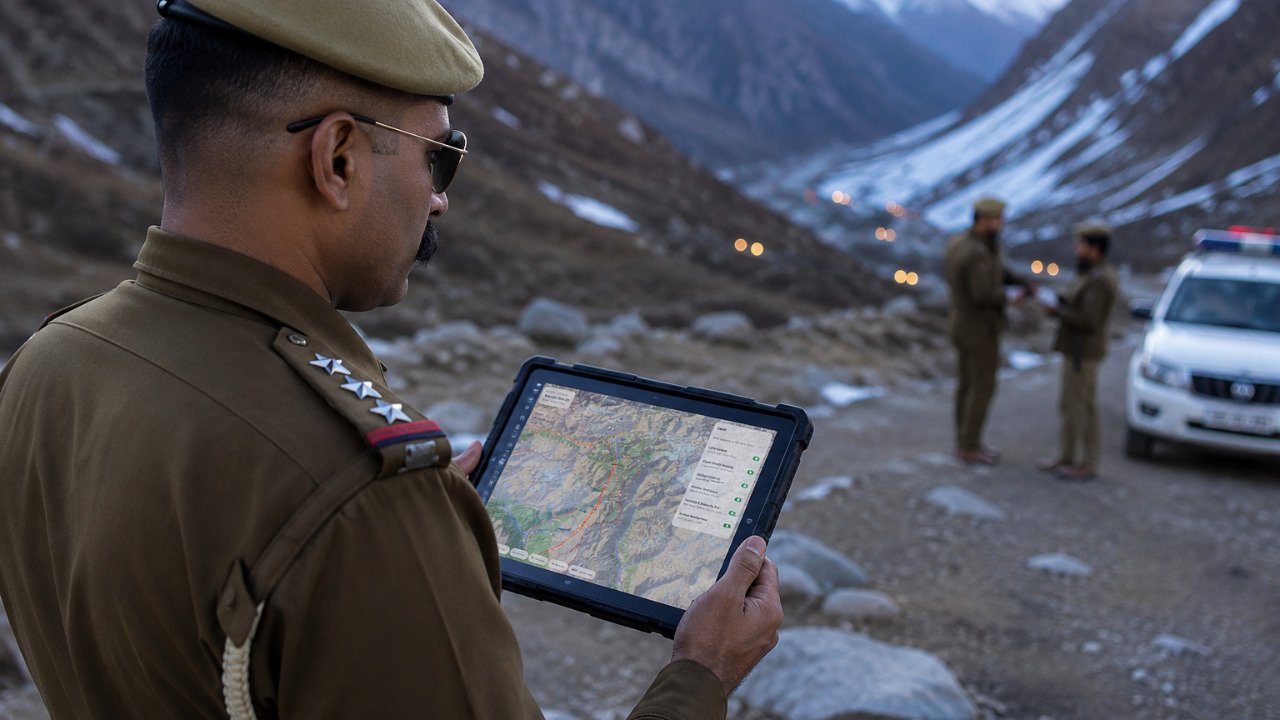
Noida, India – When officers at a Jammu & Kashmir police post need to track hundreds of personnel across a mountainous district with spotty cell coverage, there is no margin for software that crashes or syncs slowly. That is precisely the environment Vinkura was built for. The Noidabased AI and operational intelligence company is quietly becoming one of India’s most consequential govtech builders not by pitching slick demos, but by shipping systems that hold up under the pressures of real law enforcement and public administration.
Increasingly described in policy and technology circles as a potential “Palantir for India,” Vinkura develops sovereign platforms that sit at the intersection of AI, geospatial intelligence, and operational command. The company was cofounded by Akshat Shukla and Priyanshu Rajput, two builders whose defining philosophy is deceptively simple: technology that cannot work in the field is not technology at all.
“Technology that cannot work in the field is not technology at all.” – Vinkura founding philosophy
The Problem Nobody Was Solving
Walk into most Indian police stations or district administration offices and the operational reality is still paperheavy. Duty rosters live in registers. Seized property logs sit in ledgers. Evidence chains exist mostly in memory. Field reports travel by WhatsApp. Different departments run incompatible software that was never designed to talk to each other.
The result is predictable: coordination slows, accountability gaps open up, and during highstakes moments a large public event, a surge in crime, a natural disaster commanders are making decisions with incomplete pictures. Vinkura identified this structural failure not as an inconvenience but as a solvable engineering problem.
The company’s answer is an integrated Operational Intelligence Platform a connected suite of tools built around AI, secure geospatial workflows, and an offlinefirst architecture designed to function even where internet connectivity is a luxury. Critically, the platform keeps full data sovereignty with the deploying organisation. There are no foreign servers, no ambiguous cloud dependencies.
A Full Stack, Not a Single App
Where most govtech vendors sell point solutions one app for rostering, another for reporting Vinkura has built an interconnected ecosystem where data flows across modules rather than sitting in silos. Each product is designed to make the others smarter.
Vinkura Core – The operating backbone. It unifies workflows, records, and institutional accountability across departments, giving every team a single source of operational truth instead of fragmented spreadsheets and phone threads.
Sentinel – The command intelligence layer. It aggregates field reports, entity records, and live signals into a realtime operational picture. Commanders can interrogate relationships, surface patterns, and produce auditable assessments replacing the static dashboard with genuine analytical capability.
Forge – The process digitisation engine. Paperbased approvals, movement files, and administrative escalations are converted into structured, trackable digital workflows. Fewer errors. Better audit trails. Cleaner data feeding back into intelligence tools.
Orbit – The deployment and infrastructure layer. It manages secure operations across state data centres, district offices, and edge devices including airgapped environments where standard cloud connectivity is absent.
DDMS Dynamic Duty Management System – The personnel operations platform. Staff data, equipment logs, shift rostering, and deployment visibility are brought together so district commanders can allocate human resources with precision rather than guesswork.
Emaalkhana – A digital overhaul of evidence and property management. It replaces manual registers with a secure, tamperevident chain of custody system for seized items a critical requirement for any case that reaches court.
Voice – A fieldfirst interface that lets officers access critical information handsfree via voice commands. Designed for the moments when typing is not an option: crowd management, vehicle checks, active operations.
Proven in the Field, Not Just the Lab
The distinction that sets Vinkura apart in a crowded govtech landscape is production deployment. Its systems have been activated in real operations with Uttar Pradesh Police and Jammu & Kashmir Police not in controlled pilots, but under actual field conditions.
The clearest proof point arrived in 2026, when Vinkura delivered the Pehchan App in collaboration with Ganderbal Police for the Amarnath Yatra pilgrimage. The QRcodebased identity verification system registered and authenticated thousands of service providers along the Baltal route and across the Sonamarg corridor a highaltitude, hightraffic environment where conventional identity checks would have created dangerous bottlenecks. Security personnel could verify anyone in seconds. The operation ran without incident.
The company’s Trinetra deployment provided realtime coordination infrastructure for largescale police operations, maintaining field visibility even in zones with nearzero cellular coverage a problem most enterprise software vendors decline to even attempt.
“The Pehchan App verified thousands of service providers in real time at 3,500 metres. That is what ‘productionready’ actually means.”
AI That Stays in Its Lane
Akshat Shukla and Priyanshu Rajput are deliberate about the role AI plays in their platforms. Vinkura’s systems automate the routine report generation, data aggregation, pattern surfacing, administrative workflows so that human officers can focus on judgment, not paperwork. In sensitive domains like law enforcement, the company holds a firm line: AI informs decisions, it does not make them.
This is not just a values position. It is an architectural one. Every insight the platform surfaces is auditable, traceable, and explainable to a human supervisor or a court. In a sector where accountability is not optional, that design choice matters.
India’s Govtech Moment
India’s push toward smart governance digital public infrastructure, datadriven policing, sovereign cloud has created a market that legacy foreign vendors are poorly positioned to serve. They were not built for Baltal. They were not built for a district magistrate’s office in eastern UP. Vinkura was.
The company continues to invest in computer vision, document intelligence, geospatial analytics, and secure edge computing the technical stack that underpins practical field intelligence. Its longerterm ambition is an operational layer that any government department or law enforcement agency can plug into, without surrendering data sovereignty or becoming dependent on foreign infrastructure.
“Palantir for India” is still a shorthand, not a final destination. But Vinkura’s deployments, its product depth, and its willingness to operate in conditions most enterprise vendors walk away from suggest the shorthand may be underselling what is actually being built.