From Managing Waste to Reimagining Cities: How Manas Pandey Is Bringing a New-Generation Approach to Business”
A transformation is under way across Indian business. A new generation is entering traditional industries—not necessarily to replace what already exists, but to rethink how these businesses are run, scaled and prepared for the future.
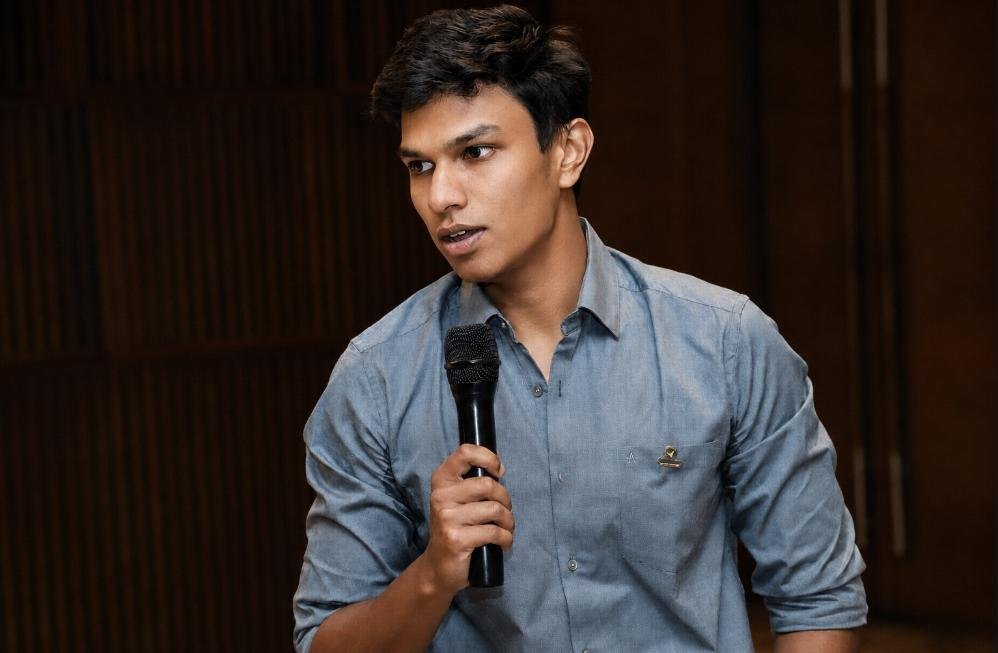
Among this emerging generation is Manas Pandey, Director at Ground Zero Group and Director of Business Development & Operations at International Waste Management (IWM).
While many young entrepreneurs gravitate toward technology startups and consumer brands, Manas has chosen a different path: working across businesses that solve real-world, operational problems.
At the centre of his approach is a simple philosophy: bring structure to chaos, remain people-centric, and build businesses around international systems and standards.
It is a philosophy that extends beyond any one company or industry.
One Group, Three Industries, One Philosophy
Ground Zero Group operates across three distinct industries—waste management, travel & hospitality, and manufacturing.
At first glance, the three sectors have little in common. One deals with the complex challenge of keeping cities clean and functioning. Another revolves around experience, mobility and hospitality. The third is built around products, production and supply.
But Manas believes the fundamentals behind running them successfully are remarkably similar.
“Industries change, but the fundamentals of business don’t. You are still managing people, solving problems and building systems that have to perform every single day.”
Across Ground Zero Group, this thinking translates into three principles:
1. Chaos Management
Real-world businesses rarely run exactly according to plan. Machines break down, schedules shift, customer requirements evolve and unexpected challenges emerge.
Rather than trying to eliminate uncertainty, Manas believes businesses should build systems capable of performing within it.
For him, chaos management is the ability to bring structure, accountability and speed to unpredictable situations.
2. People-Centric Operations
Despite the growing emphasis on automation and technology, Manas believes businesses remain, at their core, human.
Whether it is a sanitation worker operating machinery, a traveller trusting a company with an important journey, an employee on a manufacturing floor or a government stakeholder overseeing a project, people sit at the centre of every operation.
Technology should enable people—not replace the importance of relationships, responsibility and trust.
3. International Systems, Indian Execution
The third principle is adopting global technologies, processes and management practices while recognising that India requires its own execution model.
International systems provide the benchmark. Indian experience determines how those systems actually work on the ground. This philosophy is particularly visible at International Waste Management.
Learning the Business From the Ground Up
Manas’s journey did not begin with simply stepping into a leadership position in an established family business.
It began on the ground—understanding machines, municipal operations, tenders, manpower, maintenance, clients and the realities of keeping large-scale operations running every day.
International Waste Management became one of the most important environments for developing this perspective.
Working closely with IWM exposed him to an industry that receives relatively little attention despite being fundamental to every growing city.
It also reinforced an important belief: India’s urban sanitation challenges cannot be solved through manpower alone.
The future has to be mechanised, technology-driven and operationally disciplined.
Taking IWM Into Its Next Phase
International Waste Management has built its experience around mechanised urban sanitation and environmental infrastructure, including mechanised road sweeping, sewage and water cleaning, and specialised municipal services.
Now, the focus is on carrying that experience into its next phase.
As IWM expands its footprint, the vision is to introduce technology-led sanitation systems across more Indian cities while continuing to explore advanced machinery, international technologies and new approaches to urban operations.
For Manas, however, expansion cannot simply mean adding more machines or entering more cities.
It has to mean building repeatable systems capable of operating at city scale.
That requires the right equipment, trained manpower, preventive maintenance, deployment planning, monitoring and accountability all working together.
Indore: A Model for What Is Possible
One of the strongest examples behind this thinking comes from Indore.
For more than a decade, advanced mechanised road-sweeping operations have formed part of the city’s approach to maintaining cleaner roads.
The significance of the model goes beyond the machines themselves.
It demonstrates what can happen when technology, municipal planning and consistent execution work together over the long term.
For Manas, the opportunity now is to draw lessons from such operations and explore how similar technology-driven sanitation systems can be adapted for cities across India.
The Next Generation of Traditional Business
Waste management, manufacturing and municipal infrastructure may not traditionally be considered glamorous industries.
Manas believes that is precisely what makes them interesting. India’s next generation of entrepreneurship does not necessarily have to centre on another app or consumer startup. There is an equally significant opportunity in taking established industries and asking how technology, global practices and modern management can transform them.
Rather than moving away from traditional businesses, his focus is on asking: How can we make traditional industries operate like modern businesses?
Better technology. Better monitoring. Better processes. Better accountability.
And ultimately, better outcomes.
Beyond the Boardroom
That philosophy of pushing limits extends beyond business.
Fitness forms an important part of Manas’s lifestyle, while mountaineering and off-roading take him into environments far removed from boardrooms and operating sites.
Mountaineering, in particular, reflects many of the qualities he values professionally—preparation, endurance, adaptability and composure when conditions change.
Off-roading carries a similar appeal. The route is rarely perfect, conditions are unpredictable, and progress often depends on knowing when to accelerate, when to adapt and when to find another way forward.
It is perhaps fitting for someone whose professional philosophy revolves around managing chaos.
Building for the Long Term
For Manas, the ambition behind Ground Zero Group extends beyond building businesses across multiple sectors.
It is about developing organisations capable of operating professionally at scale while retaining a strong human element.
Waste management, travel & hospitality and manufacturing may require entirely different technologies, teams and strategies, but the underlying philosophy remains consistent: people first, systems behind them, technology enabling both.
As IWM expands and Ground Zero Group’s businesses evolve, Manas sees his role as helping bridge two worlds—the experience and relationships built by an earlier generation with the technology, systems and ambition of the next.
“You cannot eliminate chaos from business. The real advantage comes from building people and systems capable of performing within it.”
For Manas Pandey, that philosophy applies whether the challenge is running a business, transforming urban infrastructure or finding a way forward when there is no road at all.