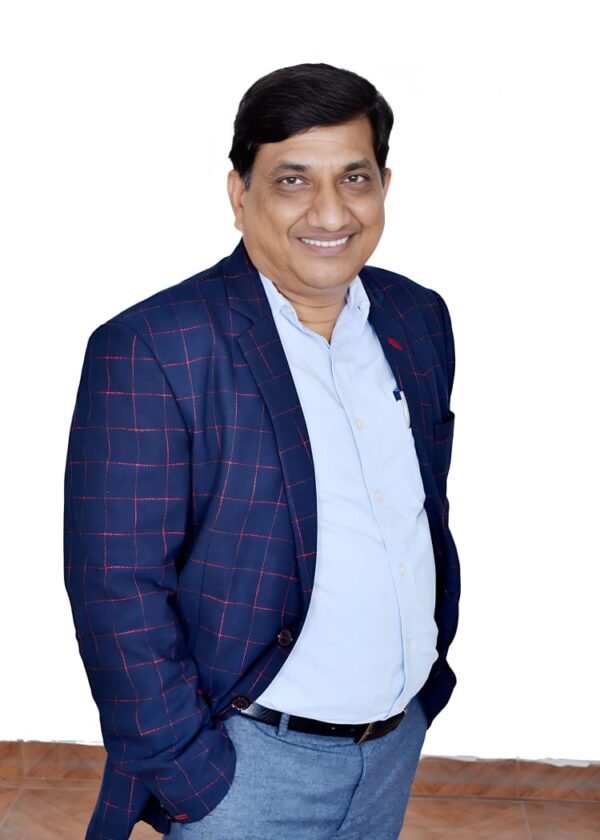
Yash Sinha: Building a New Model of Healthcare Operations in India
In Indian healthcare, hospitals are often judged by their doctors, infrastructure and technology. Yet behind every successful hospital is another discipline that receives far less attention: healthcare operations.
It is the ability to bring together clinical capability, finance, compliance, people, infrastructure, patient acquisition and execution into one functioning system.
This is the professional space in which Yash Sinha is building his reputation as a healthcare operator and hospital leader.
As Managing Director of Kamy General Hospital, Patna, Yash is responsible for far more than conventional hospital administration. His work sits at the intersection of hospital strategy, operations, financial management, clinical service development, regulatory compliance, patient acquisition and healthcare partnerships.
Rather than approaching a hospital as a collection of departments, he approaches it as an interconnected operating system.
And that distinction defines much of his professional philosophy.
Managing a Hospital as an Operating Business
The role of a Managing Director in an independent hospital is fundamentally different from a narrowly defined corporate position.
Decisions cannot remain inside presentations.
They eventually affect a patient, a doctor, an operating theatre, a reimbursement claim, a staff member or the hospital’s balance sheet.
At Kamy General Hospital, Yash’s responsibilities extend across the organisation.
He is involved in strategic planning, hospital finances, department development, consultant coordination, operating-theatre utilisation, PMJAY operations, regulatory compliance, referral development, marketing, diagnostics, pharmacy economics, vendor negotiations and new partnerships.
This gives him visibility across the complete healthcare value chain.
A decision to introduce a new specialty, for example, is not simply a clinical decision.
It requires evaluating:
patient demand → specialist availability → infrastructure → procedure economics → referral potential → documentation → compliance → patient acquisition → utilisation → profitability.
This systems-oriented approach has become central to how Yash thinks about hospital management.
From Administration to Healthcare Operations Engineering
Yash describes many hospital problems through a concept that can be called operational leakage.
Hospitals frequently lose significant value without noticing it.
A patient visits OPD but gets diagnostics elsewhere.
A surgical enquiry never converts because nobody follows up.
An expensive machine remains underutilised.
Doctors generate consultations but the hospital fails to retain downstream procedures.
Marketing teams report meetings instead of patients.
Departments operate independently instead of functioning as a patient-care ecosystem.
Government reimbursement gets delayed because documentation is incomplete.
Individually, these may appear to be small operational issues.
Collectively, they can determine whether a hospital grows or stagnates.
Yash’s work increasingly focuses on identifying these hidden points of leakage and converting them into measurable systems.
That includes areas such as:
OT utilisation and surgical conversion
OPD-to-diagnostics conversion
pharmacy and pathology integration
consultant productivity
patient funnel tracking
referral attribution
departmental profitability
infrastructure ROI
reimbursement documentation
operational dashboards
follow-up systems
marketing productivity
The objective is not simply increasing revenue.
It is building a hospital where clinical capability, patient experience and financial sustainability reinforce one another.
Turning Kamy General Hospital into a Healthcare Platform
Under Yash’s management approach, Kamy General Hospital is being developed not merely as a neighbourhood hospital but as a multi-specialty healthcare platform capable of building partnerships around its infrastructure and clinical network.
The hospital combines surgical services, gynaecology, orthopaedics, diagnostics, pharmacy, ultrasound, operating-theatre capability and government health-scheme access while continuing to expand its specialist network.
Yash’s role as Managing Director involves continuously deciding where the hospital should allocate its limited resources.
Which department should be expanded?
Which specialist relationship can become sustainable?
Which equipment investment will actually generate utilisation?
Which referral channel can consistently produce patients?
Which healthcare partnership creates genuine value?
Which operational activity should management stop doing altogether?
These questions reflect another principle central to his management style:
Activity is not the same as progress.
A hundred meetings that generate no patients are not necessarily more valuable than five relationships that produce consistent clinical referrals.
A new machine is not an asset simply because it has been purchased.
A memorandum of understanding has little value unless something meaningful happens after it is signed.
For Yash, healthcare management ultimately has to be evaluated through outcomes.
Building Referral Networks as Measurable Systems
One of Yash’s strongest areas of professional interest is healthcare referral economics.
Much of India’s healthcare system, particularly outside metropolitan corporate networks, still depends heavily on trust-based referral relationships.
General practitioners, rural practitioners, physiotherapists, diagnostic centres, pharmacies, nursing homes and community networks frequently influence where patients ultimately receive specialised care.
Yet most hospitals manage these relationships informally.
Yash has been exploring ways to transform referral networks into measurable systems.
The underlying idea is simple:
If a hospital cannot identify where patients are coming from, it cannot intelligently improve its patient acquisition strategy.
This thinking extends into referral attribution, physician outreach, geographical patient mapping, OPD conversion analysis and even modelling how physician reputation spreads through word-of-mouth networks.
Instead of treating healthcare marketing as advertising alone, Yash increasingly views it as network engineering.
Hospital Economics Before Hospital Expansion
Hospital owners frequently make a dangerous assumption:
growth requires more infrastructure.
Yash’s approach is often the opposite.
Before expanding infrastructure, understand utilisation.
Before buying equipment, understand patient volume.
Before hiring specialists, understand the downstream economics.
Before launching another department, understand the referral ecosystem required to support it.
That mindset has led him to focus extensively on hospital unit economics.
A department should not merely generate revenue.
Its contribution must be understood after considering doctor payouts, consumables, staff utilisation, infrastructure, referral costs, diagnostics and opportunity cost.
This is particularly important for independent hospitals where capital cannot be deployed endlessly.
The Managing Director therefore becomes, in part, a capital allocator.
Every rupee invested in infrastructure competes with another potential use of capital.
Yash’s management philosophy increasingly centres on ensuring that hospital investments produce measurable clinical and economic productivity.
Healthcare Compliance as an Operating System
Healthcare compliance is another area Yash treats differently.
For many organisations, compliance becomes a periodic administrative exercise.
For hospitals, that approach creates significant risk.
Clinical establishment requirements, municipal regulations, fire safety, biomedical waste, labour regulations, taxation, government health schemes and reimbursement documentation all interact with daily hospital operations.
Yash’s approach is to convert these obligations into recurring operational systems with responsibilities, documentation and deadlines.
The objective is simple:
compliance should not depend on someone remembering that something is due.
It should be embedded into how the hospital operates.
This reflects a broader principle behind his work:
Strong organisations replace memory with systems.
A Ground-Level Perspective on Indian Healthcare
Perhaps the most important element of Yash Sinha’s professional perspective is where it comes from.
His ideas are not developed entirely from consulting frameworks or corporate healthcare theory.
They come from operating a hospital in Patna.
That means dealing with realities that healthcare strategy often ignores:
patients with limited purchasing power,
government insurance,
informal referral networks,
specialist availability,
working-capital constraints,
regulatory uncertainty,
staff productivity,
family-run healthcare organisations,
local competitive dynamics,
and the enormous importance of reputation.
These constraints make healthcare operations in Tier-2 and Tier-3 India fundamentally different from managing large metropolitan hospital chains.
Yash believes this part of Indian healthcare deserves its own management frameworks.
Strategies designed for ₹1,000-crore hospital groups cannot simply be copied into a 30- or 50-bed independent hospital.
Different economics require different operating models.
Healthcare as a Trust Economy
Despite his strong focus on finance and operations, Yash repeatedly returns to one variable that cannot be captured completely in a spreadsheet:
trust.
Healthcare is one of the few industries where the customer frequently cannot independently judge the quality of the product they are buying.
Patients therefore rely on signals.
The referring doctor.
The reputation of the surgeon.
How transparently the hospital communicates.
Whether someone answers during a complication.
Whether costs are predictable.
Whether family members feel informed.
Whether previous patients recommend the institution.
This makes trust not merely a branding variable but an economic asset.
Hospitals that systematically build trust can lower patient-acquisition friction, improve referrals, increase treatment acceptance and strengthen long-term reputation.
Yash therefore looks at patient experience, referral systems, communication and clinical credibility as interconnected parts of hospital economics.
The Emerging Role of the Healthcare Operator
India has thousands of doctors.
It has hospital administrators.
It has healthcare consultants.
It has investors.
But another professional category is becoming increasingly important:
the healthcare operator.
The healthcare operator sits between all of them.
They understand enough finance to allocate capital.
Enough healthcare to understand clinical workflows.
Enough operations to design systems.
Enough marketing to understand patient acquisition.
Enough regulation to protect the institution.
And enough ground reality to know when a strategy that looks excellent on paper will fail inside a hospital.
That is the professional identity Yash Sinha is deliberately building.
Not simply as someone who manages a hospital.
But as someone who studies how hospitals actually work.
Beyond Kamy
Kamy General Hospital remains the operating laboratory behind much of Yash’s thinking.
But his professional interests increasingly extend into larger healthcare questions:
How can independent hospitals compete intelligently with large chains?
How should Tier-2 hospitals measure marketing productivity?
Can referral networks be quantified?
How should hospitals calculate the ROI of clinical infrastructure?
Can telemedicine create specialist-access networks without destroying unit economics?
How can government health schemes be integrated into sustainable hospital models?
How should smaller hospitals build management systems without massive corporate teams?
How can patient trust itself be treated as an operating variable?
These are not merely questions of hospital administration.
They sit at the intersection of healthcare economics, operations research, consumer psychology, technology and management.
Defining Yash Sinha Professionally
The simplest description may therefore be this:
Yash Sinha is a healthcare operator, hospital Managing Director and healthcare systems thinker focused on building financially sustainable, operationally disciplined and patient-centred healthcare organisations.
His work spans:
Hospital Operations
Healthcare Finance
Hospital Growth Strategy
Clinical Service Development
Referral Economics
Patient Acquisition
Regulatory Compliance
Healthcare Partnerships
Digital Health
Hospital Infrastructure ROI
Operational Analytics
Tier-2 and Tier-3 Healthcare Systems
At Kamy General Hospital, those ideas are tested against something far more demanding than theory:
a functioning hospital.
And that may ultimately be what distinguishes Yash Sinha’s professional identity.
He is not studying healthcare systems from the outside.
He is operating one, measuring it, rebuilding parts of it, and developing ideas from what happens when strategy meets reality.