India Is Building More Factories. But Are Its Paintshops Ready for the Next Manufacturing Boom?
India’s manufacturing story is entering a more demanding phase. New plants, new production lines and fresh capacity are being added across electronics, electric vehicles, automotive components and other industrial categories. In August 2026, the government said 38 plants under the Electronics Components Manufacturing Scheme were already operational, with another 16 in advanced stages of construction. Electronics production itself has expanded sharply over the past decade, while new semiconductor, component and EV investments are widening the industrial base. In the EV sector too, companies are expanding capacity: Ultraviolette recently announced a new Hosur facility planned for an initial annual capacity of 250,000 vehicles.
But as factories scale, one part of the manufacturing ecosystem deserves far more attention: the paintshop.
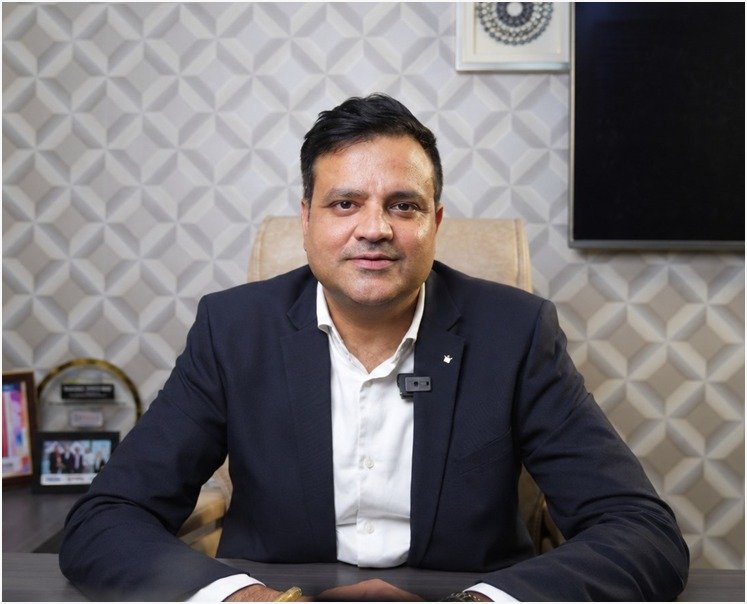
A paintshop is often treated as a downstream utility, something to be designed after production capacity, machinery and layouts have been finalised. Raunak Parashar, founder of DTRA Engineers and the Dipole brand, believes that approach can create expensive problems later.
For manufacturers, surface finishing is not simply about appearance. It influences corrosion resistance, product life, rejection rates, energy consumption, throughput and the ability to maintain consistent quality at scale. A factory can increase output on paper, but if its pretreatment, coating, curing or material-handling systems cannot keep pace, the paintshop can become a hidden production bottleneck.
Designing for Tomorrow’s Capacity
Parashar’s experience in surface finishing comes from a business environment he has known since childhood. Today, DTRA Engineers operates three manufacturing units and works across turnkey powder coating lines, liquid painting systems, pretreatment plants, CED lines, anodising systems, industrial ovens and related automation.
His central argument is that manufacturers should stop designing paintshops only around today’s production numbers.
A line that is adequate for current output may become restrictive once volumes rise, product dimensions change, new substrates are introduced or automation increases. Retrofitting these limitations later can be far more disruptive than planning for them at the design stage.
The question, therefore, should not only be, “What capacity do we need now?” It should also be, “What will this factory need five years from now?”
The Hidden Cost of Poor Paintshop Planning
The cheapest system on a quotation is not necessarily the lowest-cost system over its operating life.
Poor pretreatment can lead to coating failures. Inconsistent curing can affect finish quality. Inefficient ovens can raise energy costs. Weak material flow can reduce throughput. And when equipment is selected without considering maintenance access, operator capability or future automation, the manufacturer may inherit limitations that are difficult to correct.
That is why Parashar advocates a consultation-first approach: understand the product, production target, available floor space, quality requirements, operating environment and expansion plan before recommending equipment.
[Founder approval quote: “A paintshop should not be designed around the machine a manufacturer wants to buy. It should be designed around the production problem the factory needs to solve, today and five years from now.”]
From Equipment Purchase to Manufacturing Strategy
This shift matters because India’s next phase of manufacturing growth will demand more than additional factory space. It will require infrastructure that can deliver consistent quality at higher volumes without allowing rejection, downtime and energy consumption to grow at the same pace.
For plant heads and manufacturing founders, that means bringing surface finishing decisions earlier into factory planning. Pretreatment chemistry, coating technology, automation, curing, material movement, maintenance and future capacity should be considered as one connected system rather than separate purchases.
For Parashar, this is also where the role of the paintshop supplier must evolve. The industry does not simply need vendors who can install equipment. It needs technical partners who can question assumptions before capital is committed and remain accountable after commissioning.
India may be building more factories. The more important question is whether the systems inside those factories are being built for what comes next.
If the country wants manufacturing capacity that is competitive not just in volume but also in quality, efficiency and reliability, the paintshop cannot remain an afterthought. It has to become part of the manufacturing strategy from day one.