Why Construction Equipment Rental Is Becoming a Strategic Advantage for Indian Infrastructure Companies
As India enters a new phase of infrastructure growth, the biggest competitive advantage may not come from owning more machines, but from having access to the right equipment at the right time.
For decades, construction companies viewed equipment ownership as a symbol of capability and scale. A larger fleet often represented stronger execution capacity. However, as infrastructure projects become more complex, timelines become tighter, and capital efficiency becomes more important, the industry is witnessing a shift. Construction equipment rental is emerging as a strategic business decision rather than just an operational convenience.
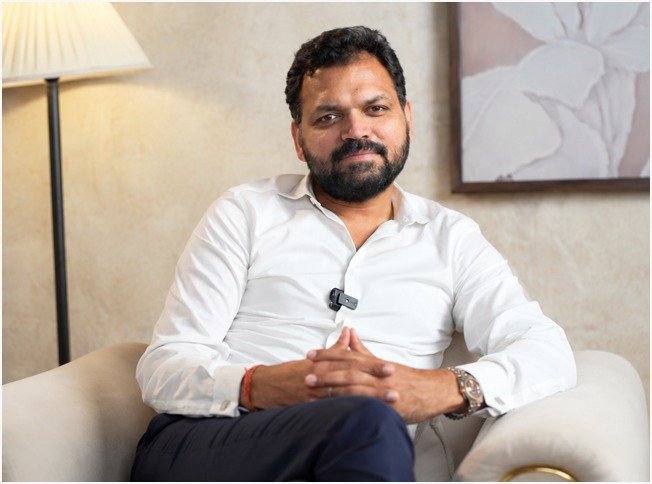
According to Gaurav Gupta, Founder and Managing Director of Suntech Infra Solutions Ltd, the conversation around construction equipment needs to move beyond ownership. “In infrastructure, the question is not only about how many machines a company owns. The bigger question is whether the right equipment can reach the right project at the right time, with the reliability and support needed to keep execution moving,” explains Gaurav.
Moving From Equipment Ownership to Equipment Access
Large infrastructure projects require significant investment in machinery, maintenance, manpower and storage. While owning equipment can provide control, it can also create challenges when assets remain underutilised between projects.
Construction equipment rental provides companies with greater flexibility by allowing them to access specialised machinery without carrying the entire burden of ownership. This becomes especially valuable in industries where project requirements vary based on geography, scale and technical complexity.
For project owners and contractors, equipment availability, mobilisation speed and service response are increasingly becoming important factors in maintaining schedules and reducing execution risks.
Suntech Infra Solutions Ltd operates across foundation engineering, heavy construction equipment rentals and civil structures, offering an integrated approach to infrastructure execution. The company’s experience across these verticals has highlighted the importance of combining equipment capability with execution responsibility.
The New Infrastructure Challenge: Speed and Flexibility
India’s infrastructure expansion has increased demand for faster project execution. However, the pressure to complete projects within shorter timelines has also increased the importance of reliable equipment availability.
A delay in mobilisation can impact multiple stages of a project. Equipment downtime, coordination gaps and delayed deployment can create consequences beyond the immediate operational issue.
This is where rental models can provide strategic value. Instead of waiting for procurement cycles or investing heavily in every specialised requirement, companies can focus capital on core operations while accessing the equipment needed for specific project phases.
The future of construction equipment is likely to be shaped by three factors: availability, uptime and accountability.
Why Equipment Rental Is Becoming a Business Decision
The perception of rental equipment has traditionally been associated with short-term requirements. However, modern infrastructure companies are increasingly evaluating rental through a broader business lens.
The decision is no longer only about reducing upfront investment. It is about improving project agility, managing capital efficiently and ensuring that resources are available when execution demands them.
For companies working across sectors such as industrial infrastructure, energy, manufacturing, real estate and large-scale construction, flexibility in equipment deployment can directly influence project outcomes.
Gaurav Gupta believes that infrastructure success depends on how effectively companies manage uncertainty. “Projects rarely fail because of one major decision. Many times, delays happen because small execution challenges accumulate. Having dependable access to equipment and support systems helps teams stay prepared when pressure increases,” he says.
Building The Next Generation of Infrastructure Execution
As the Indian construction ecosystem evolves, equipment rental will continue to move from being a support function to becoming a strategic capability.
The companies that succeed will not necessarily be the ones with the largest number of assets. They will be the ones that understand how to combine equipment access, operational discipline, technical expertise and faster decision-making.
For Gaurav Gupta and Suntech Infra Solutions Ltd, the future of infrastructure is not only about building projects faster. It is about creating execution systems where resources, people and decisions work together to deliver greater certainty.
In a sector where every delay has a cost, access to the right capability at the right moment may become one of the most valuable assets an infrastructure company can have.