The Future of Knee Replacement in Madurai: How Jayam Ortho Hospital Is Harnessing Robotic Technology to Make Surgery More Personalised
ORTHOPAEDICS • ROBOTIC KNEE REPLACEMENT • MADURAI
Knee arthritis is one of the most common causes of persistent pain, stiffness and difficulty walking in adults. As the protective cartilage inside the joint wears away, everyday activities such as climbing stairs, getting up from a chair or walking longer distances can become increasingly difficult. Medicines, physiotherapy, weight management and injections can help in earlier stages. When arthritis becomes advanced and pain continues despite appropriate non-surgical treatment, knee replacement may be considered.
For patients searching for the best orthopedic hospital in Madurai or exploring advanced options for knee replacement, one of the most important developments is robotic-assisted surgery. This technology combines the judgement and experience of the orthopedic surgeon with digital planning and precision tools. The robot does not perform the operation independently; the surgeon remains in control throughout the procedure and uses the system to obtain additional information for planning and execution.
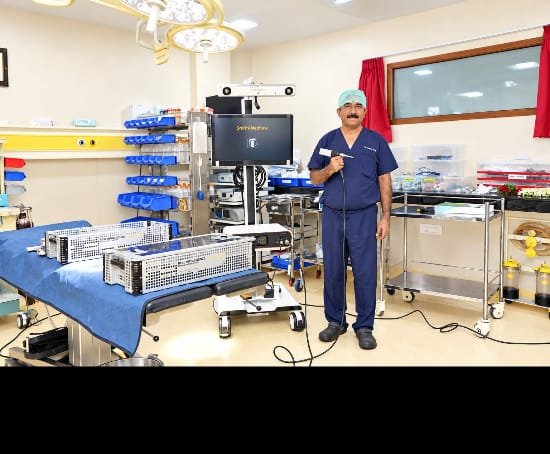
Jayam Ortho Hospital, Madurai, has introduced robotic-assisted total and partial knee replacement using the Smith+Nephew CORI Surgical System. CORI is a compact, surgeon-controlled handheld robotic platform. During surgery, the system maps the patient’s knee and creates a three-dimensional digital model without requiring a routine pre-operative CT scan for the robotic workflow. This allows the surgeon to evaluate the patient’s individual anatomy, deformity, alignment and soft-tissue balance before finalising implant position.
Why is personalisation important? Every arthritic knee is different. Some knees are bowed inward, others outward, while ligament tightness and joint wear can vary considerably. Knee replacement therefore should not be viewed simply as an identical set of bone cuts for every patient. Digital information available during robotic surgery can help the surgeon assess alignment and balance in real time and adapt the plan to the individual knee.
Once the plan is confirmed, the handheld robotic tool assists the surgeon in preparing the bone according to the planned boundaries. The surgeon can review proposed implant size, position and limb alignment and assess the knee through its range of movement. These measurements do not replace surgical judgement. Instead, they provide additional objective information that can be considered alongside clinical findings and the surgeon’s alignment philosophy.
For people looking for a robotic knee replacement surgeon in Madurai or a knee replacement hospital in Madurai, it is equally important to understand that technology is only one part of successful treatment. Appropriate patient selection, surgical technique, implant choice, anaesthesia, physiotherapy and rehabilitation all contribute to recovery. Robotic assistance is a tool designed to help the surgeon plan and execute surgery with precision; it is not a substitute for experienced clinical decision-making.
Not every patient with knee pain needs a replacement. Pain may result from early arthritis, meniscus tears, ligament injuries, cartilage problems or other conditions. Younger and active patients may require joint-preservation procedures