Keloid Management: Bringing Classical Ayurvedic Principles and Contemporary Scar-Care Research Together
Understanding keloids, available treatment options and the role of individualized, integrative supportive care
A keloid is an abnormal type of raised scar that develops when the body’s wound-healing process produces excessive fibrous tissue and collagen. Unlike an ordinary scar, a keloid may continue to grow beyond the boundaries of the original injury. It may develop after surgery, burns, acne, piercing, vaccination or relatively minor skin trauma. Keloids occur worldwide, but reliable population-level prevalence estimates—particularly for India—remain limited, and their frequency varies considerably according to genetic background, skin type and population studied.
Why do keloids develop?
Keloid formation is associated with an exaggerated wound-healing response involving inflammation, fibroblast activity and excessive collagen deposition. Genetic susceptibility, skin tension, anatomical location and the nature of the original injury may influence risk. Beyond appearance, keloids can cause itching, tenderness, pain, tightness and sometimes restriction of movement. Visible scars can also affect confidence, social interaction and quality of life.
A Broader Approach to Addressing Keloids
Keloids remain challenging because no single treatment works consistently for every person. Contemporary dermatology therefore uses a range of approaches rather than surgery alone. Silicone gel or sheets, pressure therapy and intralesional corticosteroids are among commonly used options; selected patients may also receive 5-fluorouracil, cryotherapy, laser treatment, surgery or radiotherapy. Treatment is generally individualized according to the scar’s size, location, symptoms, duration and previous response.
This individualized concept also provides a useful framework for considering Ayurveda as supportive care rather than presenting it as a proven substitute for established keloid treatment. Classical Ayurvedic practice traditionally evaluates a person’s constitution, digestive health, lifestyle, local tissue changes and other clinical features before deciding upon management.
Classical formulations such as Kanchanar Guggulu and Vriddhivadhika Vati may be encountered in Ayurvedic practice. Their selection, however, should be based on an assessment by an appropriately qualified Ayurvedic practitioner, their approved indications and the individual patient’s circumstances. It would not be scientifically appropriate to describe these medicines as clinically proven keloid treatments without condition-specific evidence.
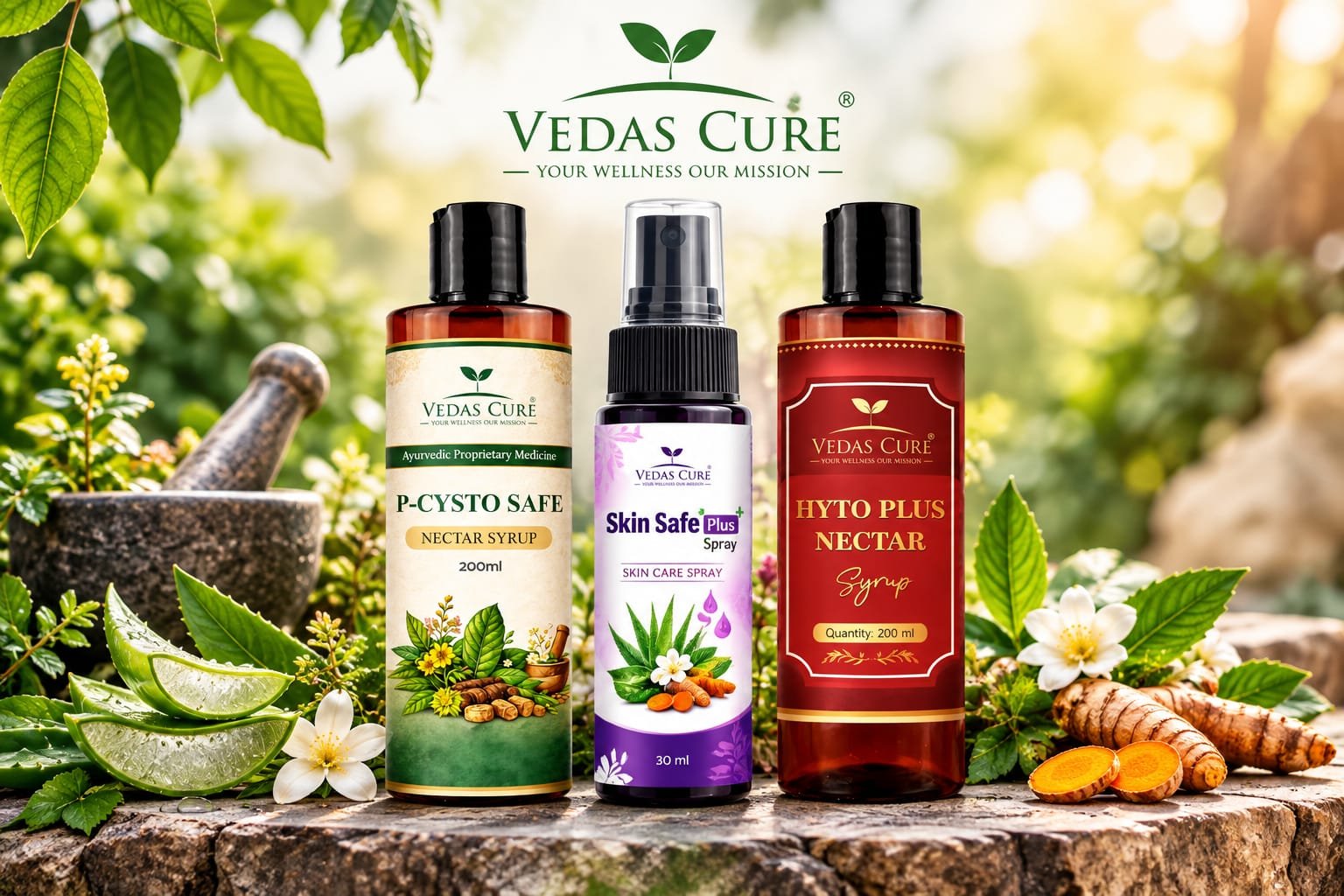
Vedas Cure has also developed proprietary formulations including Gratoten Syrup, P Cysto Safe Nectar and Hyto Plus Syrup as part of its broader Ayurvedic product portfolio. Where such products are considered by a practitioner, their role should remain consistent with their approved composition, indications and applicable regulatory requirements. Product-specific claims of flattening keloids, preventing recurrence or regenerating scar tissue should only be made where those claims are supported by the product’s regulatory status and adequate evidence.
An important part of contemporary scar management is local scar care. Research on keloids supports the role of silicone gel or silicone sheeting as one of the non-surgical approaches used in scar management. Silicone-based topical care aims primarily to maintain an appropriate hydrated environment over the scar and may contribute to improvements in scar characteristics in suitable cases.
From a formulation perspective, an appropriately designed topical scar-care product may therefore focus on practical objectives such as maintaining scar hydration, improving softness and supporting a smoother skin surface. Terms such as “helps maintain scar hydration,” “supports smoother-looking scar texture,” and “helps soften the appearance of raised scars” are more appropriate than promising that a product will permanently remove a keloid.
The most responsible approach, therefore, is not to position Ayurveda and modern dermatology as competing systems where one necessarily replaces the other. A person with a growing, painful, itchy or recurrent keloid should first receive an appropriate clinical assessment. Dermatological interventions can then be considered according to evidence and clinical need, while qualified Ayurvedic professionals may provide individualized supportive guidance within the scope of Ayurvedic practice.
Customized Diet and Lifestyle Support for People with Keloids
Nutrition cannot be presented as a treatment that removes keloids, but a balanced diet remains relevant to general skin and wound health. A practical plan may emphasize adequate protein through dal, pulses, paneer, curd, eggs or other appropriate sources; vitamin-C-containing foods such as amla, guava and citrus fruits; vegetables, fruits, nuts and seeds; and adequate hydration.
Rather than prescribing a single “keloid diet” for everyone, dietary advice should be individualized according to age, body weight, digestive tolerance, medical history, food preferences and nutritional requirements.
Vedas Cure’s NSDC-certified Ayurveda diet counsellors may provide individualized diet and lifestyle guidance as a supportive wellness service. Such counselling should complement—and not replace—medical assessment or necessary dermatological treatment.
Yoga and Stress Management as Supportive Care
Yoga does not remove or flatten a keloid directly, and it should not be described as a keloid treatment. Its more appropriate role is in supporting general wellbeing, mobility, relaxation and stress management, particularly because visible or symptomatic scars can affect psychological wellbeing and quality of life.
Gentle practices such as Anulom-Vilom, Bhramari Pranayama, diaphragmatic breathing, Tadasana, Shavasana and guided meditation may be incorporated according to a person’s physical ability. Movements that excessively stretch or place friction on a recently injured or scarred area should be avoided unless cleared by the treating professional.
As part of its wellness initiatives, Vedas Cure organizes complimentary yoga sessions periodically, providing participants with an opportunity to incorporate guided yoga and relaxation practices into their broader lifestyle routine.
Ultimately, keloid management requires realistic expectations. Current evidence shows that several therapeutic options are available, yet keloids remain difficult to treat and recurrence can occur. An individualized plan that combines appropriate medical assessment, evidence-based scar care and sensible lifestyle support offers a more balanced way to address both the physical and quality-of-life aspects associated with keloid scars.
Content Writer:
Vikas Chawla (Ayurvedic Pharmacist)
Editorial note: This article is intended for general educational awareness and should not be interpreted as a diagnosis, prescription or assurance of cure. Treatment should be individualized by an appropriately qualified healthcare professional.