Companion Leadership: Walking Beside in a New Era of Work
The Shift from Command to Companionship
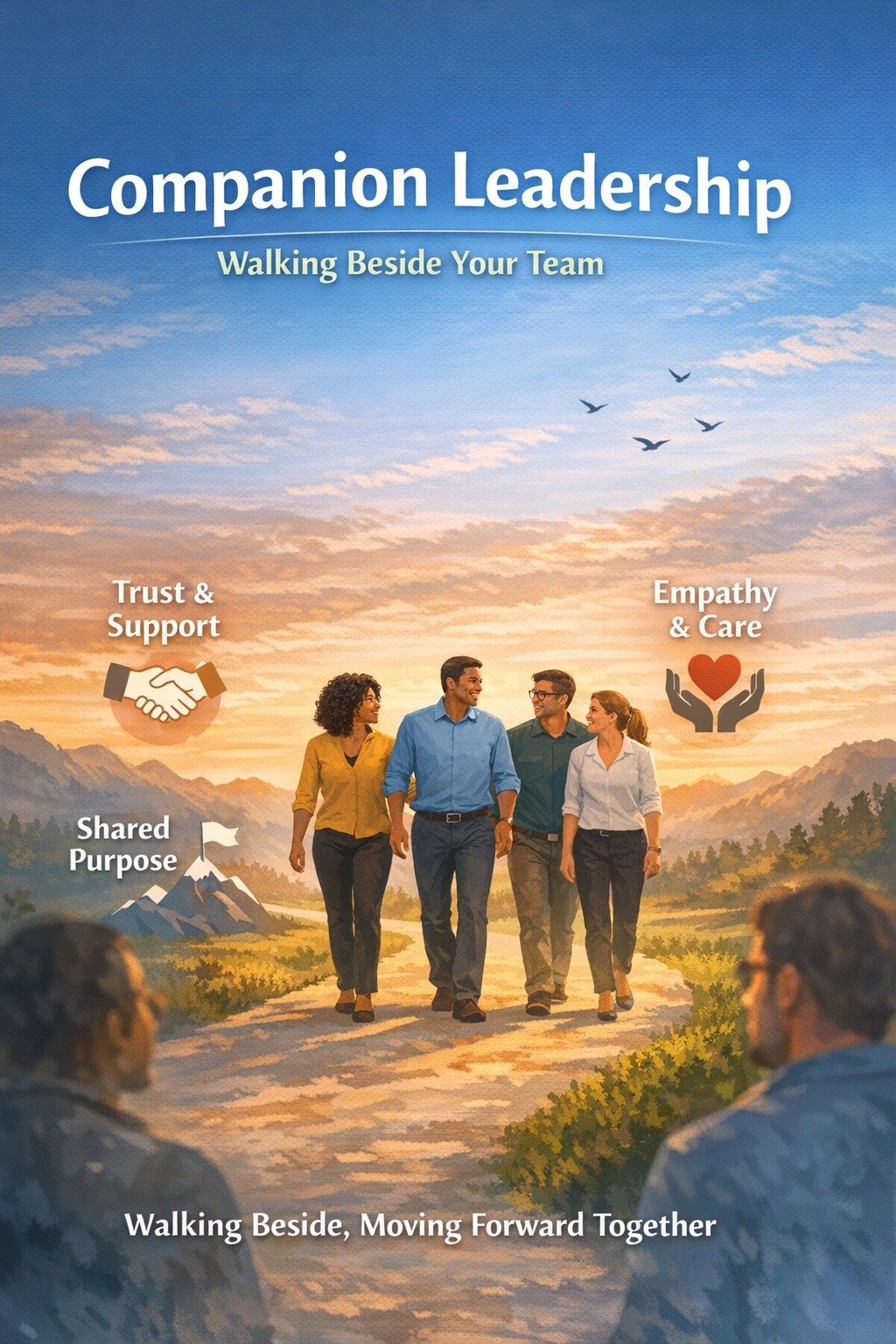
For decades, leadership was synonymous with hierarchy, authority, and control. Leaders either stood ahead of teams to direct or behind them to push for results. But in today’s knowledge-driven, collaborative, and human-centric organizations, this model is increasingly obsolete. Dr. Vishwanand Pattar’s concept of Companion Leadership offers a transformative alternative: leaders walk beside their people, fostering trust, empathy, and shared accountability.
Core Principles of Companion Leadership
Dr. Pattar’s framework rests on several foundational ideas:
- Shared Purpose: Leadership is not about imposing vision but co-creating it with teams.
- Empathy and Presence: Leaders must be attuned to emotional and psychological needs, not just performance metrics.
- Equality in Journey: Walking beside means recognizing that leadership is a collective journey, not a solo act.
- Trust over Control: Authority is replaced by credibility, authenticity, and relational trust.
- Sustainable Growth: Companion leaders prioritize long-term well-being of people and organizations over short-term gains.
Why Companion Leadership Matters Now
The modern workplace is characterized by volatility, uncertainty, complexity, and ambiguity (VUCA). Traditional command-and-control leadership often fails to inspire creativity or resilience in such environments. Companion Leadership addresses these challenges by:
- Enhancing Psychological Safety: Employees feel supported to take risks and innovate.
- Driving Engagement: Shared purpose fosters intrinsic motivation.
- Building Resilience: Empathy and companionship strengthen collective adaptability.
- Reducing Burnout: Leaders who walk beside their teams help balance performance with well-being.
Practical Applications
Organizations can embed Companion Leadership through:
- Leadership Development Programs: Training leaders to listen actively, co-create goals, and practice empathy.
- Team Structures: Encouraging collaborative decision-making rather than top-down directives.
- Performance Systems: Shifting from individual KPIs to collective outcomes.
- Culture Building: Recognizing and rewarding behaviors that reflect companionship—mentorship, collaboration, and shared accountability.
Case Example
Consider a global agriscience company where Dr. Pattar has worked as an HR leader. By adopting Companion Leadership, managers shifted from issuing directives to facilitating dialogue. Teams reported higher engagement scores, reduced attrition, and improved innovation pipelines.
Challenges and Critiques
While compelling, Companion Leadership is not without challenges:
- Risk of Dilution: Without clear boundaries, “walking beside” may blur accountability.
- Cultural Fit: In highly hierarchical cultures, adoption may face resistance.
- Measurement Difficulty: Traditional metrics may not capture relational leadership outcomes.
Organizations must balance companionship with clarity of roles and accountability to avoid drift.
The Future of Leadership
Dr. Pattar’s Companion Leadership resonates with broader shifts toward human-centric leadership models seen in agile organizations, servant leadership, and inclusive leadership. Yet, its unique emphasis on walking beside makes it particularly relevant in an era where employees seek meaning, belonging, and psychological safety at work.
Conclusion
Companion Leadership is not about abandoning authority but reimagining it as companionship. Leaders who walk beside their teams foster trust, creativity, and resilience—qualities essential for thriving in today’s complex business environment. As organizations grapple with rapid change, adopting this model may well be the differentiator between those that merely survive and those that flourish.