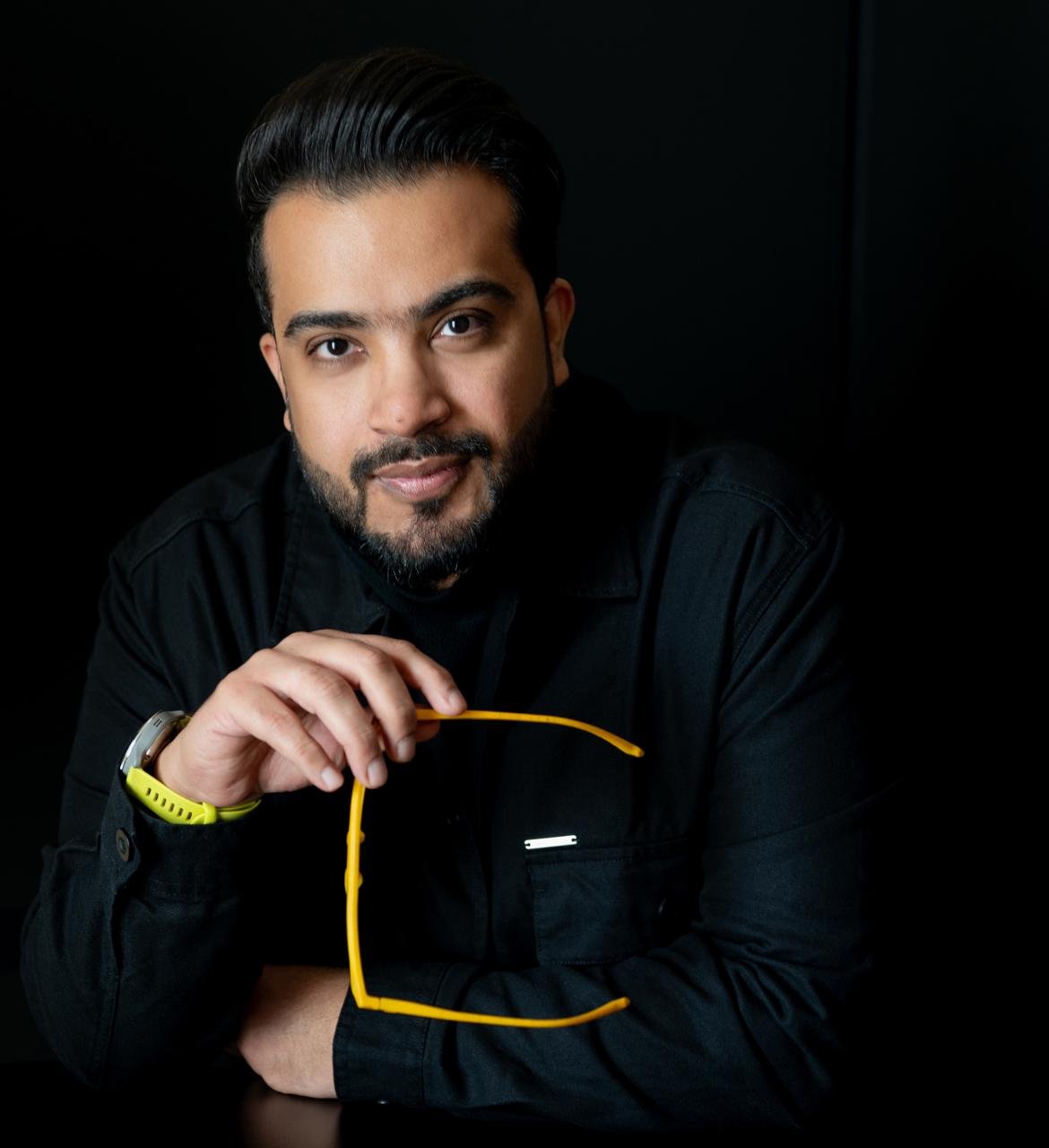
Dr. Jalis Akhtar Nasiri: A Journalist, Translator and Entrepreneur Connecting Languages, Ideas and Nations

From multilingual journalism and international affairs to translation, research and entrepreneurship, Dr. Jalis Akhtar Nasiri has built a career around one central idea: language is not merely a means of communication but a bridge between cultures, societies and civilisations. Through his writings, translations and business ventures, he has consistently worked to make knowledge travel across linguistic and geographical boundaries.
In an age where information travels faster than ever before, the ability to interpret, contextualise and communicate accurately has become increasingly valuable. Few professionals embody this intersection of journalism, scholarship, translation and entrepreneurship as comprehensively as Dr. Jalis Akhtar Nasiri. Over the past two decades, he has developed a multidisciplinary career that spans media, international affairs, language technology, academic research and multilingual publishing.
Holding a doctorate in Arabic from Jawaharlal Nehru University (JNU), New Delhi, Dr. Nasiri began his professional journey as a researcher and language specialist before expanding into journalism, translation and media entrepreneurship. His academic training, combined with practical experience in multilingual communication, has enabled him to engage with subjects ranging from constitutional debates in India to geopolitical developments across South Asia, West Asia and the broader Islamic world.
At the heart of his entrepreneurial work is Hams Live Private Limited (https://hamslive.com), a multilingual language and media company that has evolved into a comprehensive communication platform. The organisation offers translation, localisation, interpretation, multilingual content development, transcription, voice-over, AI language evaluation, publishing support and digital media solutions in numerous Indian and international languages. Its work reflects the growing demand for accurate cross-cultural communication in an increasingly globalised economy.
The company has collaborated with government departments, educational institutions, multinational corporations, publishing houses and technology companies, demonstrating how language services have become an integral part of governance, commerce and international communication. Rather than viewing translation simply as converting words from one language to another, Dr. Nasiri has consistently emphasised cultural understanding, contextual accuracy and subject expertise.
Alongside his entrepreneurial responsibilities, Dr. Nasiri serves as the Editor-in-Chief of Jaljali, an interdisciplinary research journal dedicated to promoting rigorous academic scholarship across the humanities and social sciences. Available at https://jaljali.org, the journal aims to create a platform where researchers from different disciplines and countries can exchange ideas and contribute to contemporary intellectual debates.
His editorial philosophy reflects the same values evident throughout his career: encouraging dialogue across linguistic, cultural and ideological boundaries while maintaining scholarly standards and editorial integrity.
Journalism remains one of the defining pillars of Dr. Nasiri’s professional identity. Over the years, he has written extensively on issues relating to constitutional law, communal harmony, geopolitics, security, minority affairs, diplomacy and international relations. His articles have appeared in Indian as well as international publications, addressing subjects that frequently lie at the intersection of politics, religion and society.
Among his notable contributions is “Harmonising Diversity: The Quest for a Uniform Civil Code in India,” published in City Air News. Rather than approaching the debate through partisan lenses, the article examined the constitutional, legal and social complexities surrounding the proposed Uniform Civil Code, highlighting both its opportunities and its challenges within India’s pluralistic society.
His commentary has similarly explored questions of national integration and social cohesion. In “Ajit Doval’s Outstanding Outreach to Indian Muslims,” published by Hams Live News, he analysed efforts aimed at strengthening dialogue between communities and examined broader questions surrounding national security, inclusion and trust.
International affairs have formed another major area of his writing. His article “A New Great Game: China, India, and the Dalai Lama,” published by Bitter Winter, examined the geopolitical implications of Tibet, Sino-Indian relations and the strategic dimensions of Himalayan politics. By combining historical context with contemporary developments, the article offered readers a broader understanding of an issue that extends well beyond regional boundaries.
His work has also addressed sensitive human rights and legal questions. In “Blasphemy Laws in Pakistan: A Legacy of Tragedy and Controversy,” published by Bitter Winter, Asian Lite and Greek City Times, Dr. Nasiri explored the historical evolution of Pakistan’s blasphemy legislation, the legal controversies surrounding its implementation and its wider social implications. The article reflected his broader interest in examining how law, religion and politics intersect within South Asian societies.
Throughout his journalistic career, Dr. Nasiri has sought to move beyond headlines by placing contemporary events within their historical, legal and geopolitical contexts. Whether discussing constitutional reforms, international diplomacy or social issues, his writing consistently encourages readers to appreciate complexity rather than simplistic narratives.
The breadth of Dr. Nasiri’s work extends well beyond India. His writings on Pakistan, Afghanistan and the wider South Asian region have explored issues that frequently receive limited nuanced coverage in mainstream media. Rather than focusing solely on political developments, his articles examine the historical, economic and social forces that shape regional conflicts and diplomacy.
In “Gas Pipelines Paradox: Balochistan’s Struggle for Justice and Autonomy,” published by Peace for Asia, he analysed the contradiction between Balochistan’s immense natural resources and the socio-economic challenges faced by its people. The article discussed questions surrounding resource distribution, regional development and demands for greater autonomy while placing the issue within the broader geopolitical significance of energy corridors.
His article “Lakki Marwat: A Cry for Peace Amidst Government Apathy,” published by Afghan Diaspora, highlighted the security challenges confronting communities affected by prolonged instability. Likewise, “Pakistan Elections 2024: What Went Wrong on February 8?”, published in Asian Lite, examined the controversies surrounding Pakistan’s general elections, evaluating the electoral process from political, constitutional and democratic perspectives.
Another of his widely discussed international commentaries, “Gwadar’s Discontent: CPEC Tensions Escalate Amid Protests,” published by Greek City Times, assessed growing public dissatisfaction surrounding the China-Pakistan Economic Corridor (CPEC). Rather than viewing the project exclusively through strategic or economic lenses, the article considered its local social consequences and the competing interests shaping one of the region’s most significant infrastructure initiatives.
His geopolitical analysis has also extended to West Asia. In “How Will the Iran and Saudi Arabia Reunions Affect the World?”, published by Hams Live News, Dr. Nasiri explored the implications of renewed diplomatic relations between Tehran and Riyadh for regional stability, global energy markets and international diplomacy. Similarly, “The 22nd Law Commission of India and the Challenge of Deciding on the Uniform Civil Code” revisited one of India’s most significant constitutional debates through the lens of law, governance and social diversity.
Beyond journalism, Dr. Nasiri has maintained a strong academic profile. His doctoral research on Indian Muslims has contributed to scholarly discussions on the social and cultural evolution of Muslim communities in India. His work relating to Konkani Muslims has been referenced in academic studies and has found recognition within knowledge repositories, reflecting the continuing relevance of his research for scholars working on South Asian Muslim society, identity and cultural history.
Translation has remained another defining dimension of his professional life. Working across Arabic, English, Urdu, Hindi and several other languages, he has translated government publications, technical manuals, legal documents, academic material, media content and literary works. His experience spans both traditional human translation and contemporary language technologies, enabling him to work effectively in an industry increasingly shaped by artificial intelligence while maintaining the importance of human linguistic expertise.
Among his notable literary contributions are the Urdu translations of Reopening Muslim Minds by Mustafa Akyol and The Shades of the Sword by M. J. Akbar. Both books engage with contemporary debates within Muslim societies from different perspectives, and their translation has helped make these important works accessible to a wider Urdu readership. His broader translation portfolio reflects a commitment to facilitating dialogue across languages, cultures and intellectual traditions.
As an entrepreneur, Dr. Nasiri continues to expand the scope of multilingual communication through Hams Live Private Limited. Beyond language services, the organisation has gradually developed a broader ecosystem encompassing multilingual news publishing, digital media, research support, content development and technology-enabled communication solutions. By bringing together professional translators, journalists, editors, researchers and language specialists, the company seeks to address the growing demand for accurate multilingual content in both public and private sectors.
Colleagues often describe Dr. Nasiri as someone who moves comfortably between academia, journalism and business without losing sight of the larger objective that connects them all: making reliable knowledge accessible across linguistic and cultural boundaries. Whether writing on constitutional debates in India, analysing developments in South Asia and West Asia, translating influential books, mentoring language professionals or building platforms for multilingual communication, his work reflects an enduring commitment to intellectual engagement and public understanding.
As artificial intelligence, digital publishing and global communication continue to reshape the media and language industries, Dr. Jalis Akhtar Nasiri remains focused on building institutions that combine scholarship with innovation. Through his journalism, translation, editorial leadership and entrepreneurial initiatives, he continues to demonstrate that language is far more than a professional tool. It is a bridge that connects people, ideas and societies, enabling informed dialogue in an increasingly interconnected world.