


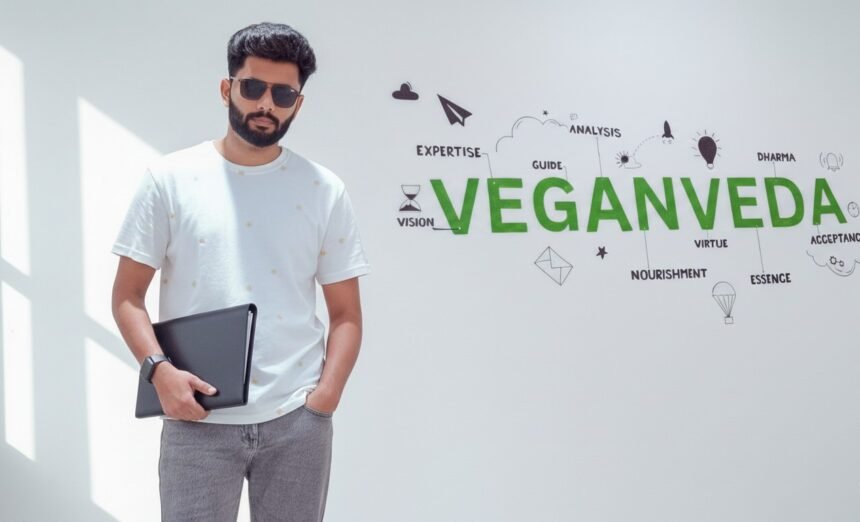
How Shubham Parihar Built VeganVeda Without Investors
In an era where startup headlines are dominated by billion-dollar valuations, venture capital announcements, and metro-city founders, some of the most compelling entrepreneurial stories are unfolding far from the spotlight.
This is one of them.
Shubham Parihar did not begin his journey in a corporate boardroom. He did not have angel investors, an elite institutional network, or a financial safety net. He began with ₹30,000 in savings, night shifts, and a quiet but relentless belief that health could transform lives — beginning with his own.
Raised in a small town, Shubham’s life was shaped early by responsibility. His father passed away when he was born, leaving his mother to raise him alone. Financial certainty was never guaranteed. Every decision carried consequence. Every aspiration required sacrifice.
Like millions of young Indians, he once dreamed of becoming a professional cricketer. Cricket was not merely a sport; it was ambition, identity, and perhaps a pathway to financial stability. But circumstances demanded practicality. Stability became more urgent than passion.
He entered the workforce — navigating multiple jobs, working night shifts, and managing exhaustion as a constant companion. Yet during those long, quiet hours, a realization began to take form.
Performance — in sports and in life — depends on health. And health depends on nutrition.
That insight became the turning point.
With just ₹30,000 in savings, Shubham launched VeganVeda, a plant-based health and wellness brand rooted in clean, natural nutrition. There was no launch event, no marketing agency, and no external funding. In the beginning, he was the entire organization.
He built the website himself. Designed the packaging himself. Managed customer queries himself. Packed orders himself — often after completing overnight shifts.
There were no investors. No team. No margin for error. Only discipline, reinvestment, and belief.
VeganVeda’s philosophy centered on clean-label, plant-based superfoods designed for preventive wellness. Rather than chasing rapid expansion, Shubham chose measured growth. Instead of aggressive spending, he reinvested profits into better sourcing, refined packaging, and stronger brand positioning.
The strategy was deliberate. Sustainable. Profitable.
Today, VeganVeda generates approximately ₹10 lakh in monthly revenue, crossing an annual run rate of over ₹1 crore, while maintaining an estimated ₹3 lakh in monthly profit. In an ecosystem where many startups prioritize valuation over viability, this level of disciplined profitability stands out.
But beyond revenue figures lies something more meaningful: stability.
For Shubham, entrepreneurship was never about headlines or status. It was about ensuring his family would never again experience financial uncertainty. It was about building something resilient — something that could endure.
The discipline he once applied to cricket found a new arena in business. Training evolved into product research. Practice became consistency. Scoreboards transformed into monthly revenue targets.
And just as in sport, endurance mattered more than applause.
Looking ahead, his ambition is bold yet grounded: to position VeganVeda among India’s leading plant-based D2C wellness brands within the next two years — not through hype, but through trust, integrity, and product excellence.
From ₹30,000 in savings to a ₹1 crore revenue milestone, Shubham Parihar’s journey is more than a startup narrative. It is a testament to resilience, belief under pressure, and the enduring power of starting — even when the odds appear uncertain.