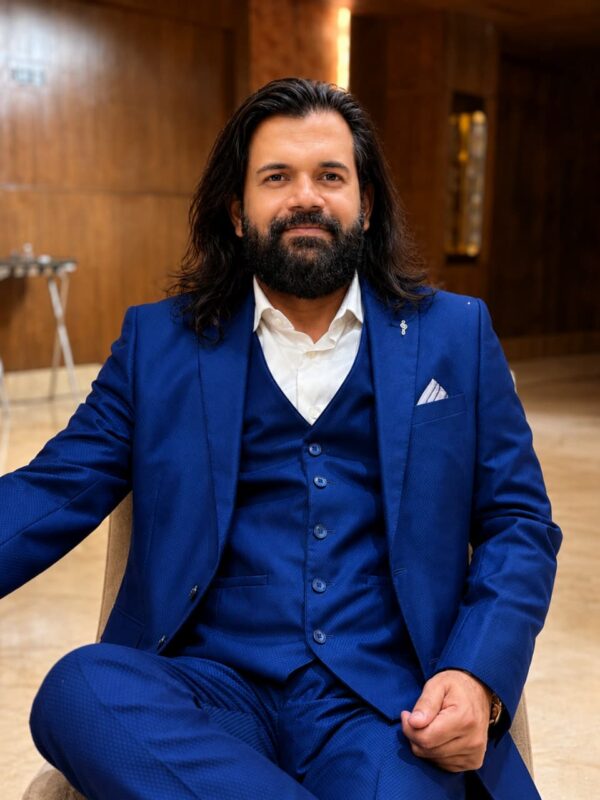
From Posting Into the Void to Marketing That Runs Itself: How Deep Parmar Is Fixing Marketing for People Who Never Wanted to Be Marketers
The Ahmedabad AI engineer behind SmartON — the talking assistive system used by 17,000+ blind and visually impaired people — has taken on a quieter problem: owners spending on marketing with no idea whether it worked.
Ask a hundred shop owners what their marketing is doing for them and you get a hundred versions of the same shrug. They post on Instagram. They boost a few posts. They pay somebody monthly to handle social media. Sales go up, or they do not, and nobody can say which of those things did it.
It is one of the most expensive silences in business, and the problem Deep Parmar has spent two years solving.
Deep Parmar is an AI engineer in Ahmedabad, co-founder and CTO of Sunbots Innovations and founder of Xwits Developers. He is not a marketer, and he says that is exactly why he noticed.
“Marketing software is built by marketing people, for marketing people,” he says. “Every tool assumes you already speak the language, that you have someone on staff to run it, and that you can read the reports it produces. Most owners have none of that. They do not need another tool. They need the job done.”
The Turning Point
Deep did not set out to build a marketing product. He got there sideways. Across seven years, more than fifty projects and two companies, the same thing kept happening — and it was never technical.
“I would build something a business really needed, then watch it sit there because nobody knew the business existed,” he says. “Great product, invisible company. Again and again.”
The problem was not that these businesses were bad at marketing. Most were doing plenty — posting, running ads, sending offers. What none could do was finish the job: find out how they were being seen, make the right thing, get it in front of people, collect everyone who showed interest, and work out which of it brought in money.
Every one of those five steps needed its own app, its own bill and its own login. Nobody was joining them up, because joining them up was a full-time job nobody had hired for.
So he built the thing that joins them up.
Marketing That Runs Itself
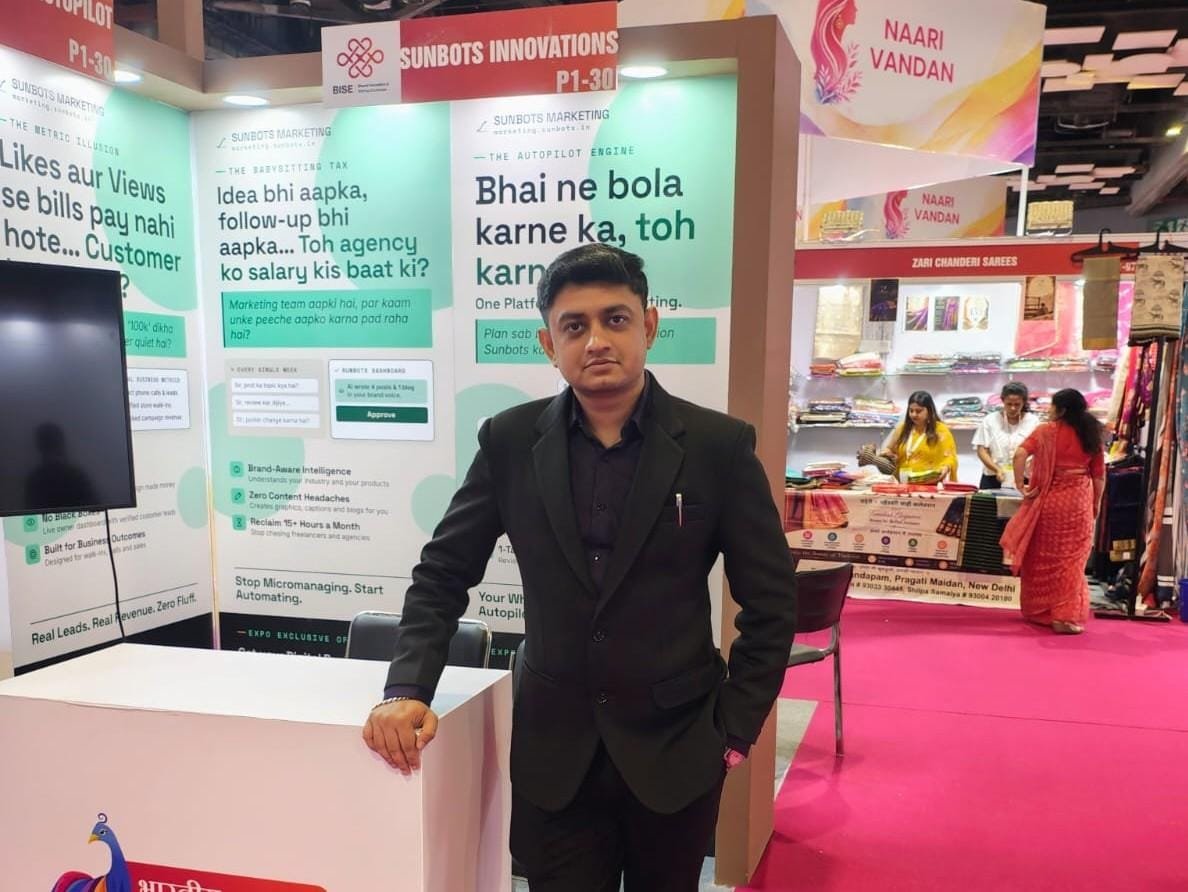
That became Sunbots Marketing, an AI marketing automation platform that does one full round of work every week, whether or not the owner logs in. Deep calls it the Marketing Autopilot Loop. It has five steps, and none of them need a marketing degree to follow.
1. It checks how you are doing. Each week it looks at how easily people can find you, how you come across, and what rivals are getting right that you are not. Nothing gets written until it knows what is missing.
2. It writes what you need. Posts, pages and emails made to close the gaps it just found — not whatever somebody pencilled into a calendar three months ago.
3. It puts it everywhere. Six channels and over 99 languages, without anyone copying and pasting the same thing into six different apps.
4. It catches the people who respond. Interest becomes names, numbers and conversations, instead of likes that pay no bills.
5. It tells you what actually worked. The step almost nobody does: at the end of the week you are told which of it brought money in. That answer feeds into the next week’s check, so it improves each time instead of simply repeating.
The point is that it is all one thing. A business doing this by hand usually pays for a writing tool, a scheduler, a website builder, an email service, a reporting add-on and an agency on top — six bills, none of which talk to each other, and not one of which answers the only question the owner cares about. Sunbots Marketing replaces the lot with one subscription and one weekly report.
The pricing follows the same thinking. There is no free version. You begin by paying for a proper check-up of your brand, and that money comes off your first month if you stay. Plans above it are priced by how much of the work you want taken off your hands.
“Free trials attract people who want to play with software,” Deep says. “I would rather work with someone who paid a small amount to hear the truth about their business.”
What Happens When People Stop Googling
The part that sets Deep apart from the rest of the marketing automation world is what he thinks is coming next.
For twenty-five years, being found meant appearing in Google’s list of ten links and hoping somebody clicked. That is breaking. More people now simply ask ChatGPT, Gemini, Perplexity or Copilot instead — and those do not hand you ten options. They hand you one answer.
“Being on page one is turning into a consolation prize,” he says. “When the AI just answers the question, there is no page one. There is the answer, and there is everyone who was not it.”
Sunbots Marketing is built for both — ordinary Google searches and the new AI ones — and Deep puts the goal in four words: be the answer AI gives. In practice that means writing things in a way the AI can read and quote, describing your business the same way everywhere it appears online, and getting mentioned in enough independent places that the AI treats you as real and worth naming.
That bet comes from being an engineer rather than a marketer. He has spent years on how machines understand questions. Now he works on who they name in the answer.
Why He Gets to Say It
What gives this weight is that Deep is not a consultant describing a business from outside. He builds, and what he builds has not been the easy sort.
The clearest example is SmartON, the AI assistive system he leads at Sunbots Innovations. People call it smart glasses, which undersells it: the glasses and everything behind them are one single product, and you use it by talking to it rather than looking at a screen. More than 17,000 blind and visually impaired people depend on it.
Building for someone who cannot see your screen changes how you think. There is no handsome design to hide behind, no chart to make a poor result look good. It helps in the moment somebody needs it, or it has failed them.
“When there is no screen, you cannot dress up a bad answer,” he says. “It either helps at that moment or it does not. I want marketing software judged the same way.”
That is the standard he brought to Sunbots Marketing: build the whole thing, and promise nothing you cannot show.
Who Is Listening
The people signing up for Sunbots Marketing are a particular sort: the owner who runs the business and everything else besides. Clinics, salons, shops, online brands, freelancers. People who have bought tools before and are tired of it.
“Nobody wants another dashboard,” Deep says. “They want the result the dashboard was supposed to give them. If my software is any good, they should hardly ever need to open it.”
It is a quieter promise than most — and, he argues, the only one that holds up in a real shop.
“Every owner I meet is already doing marketing,” he says. “They are posting, they are spending, they are trying. They are just doing it with nothing joined up and no proof. Join it up, and the same effort starts adding up instead of disappearing.”
ABOUT DEEP PARMAR
Deep Parmar is an AI engineer in Ahmedabad, India — co-founder and CTO of Sunbots Innovations and founder of Xwits Developers. At Sunbots he leads SmartON, an AI assistive system used by more than 17,000 blind and visually impaired people, who use it by speaking to it rather than looking at a screen. He also built Sunbots Marketing, an AI marketing automation platform that runs a full round of marketing every week — checking, writing, publishing, collecting enquiries and reporting what made money — designed to get businesses found on Google and in AI answers alike. More at deepparmar.in and marketing.sunbots.in.
Media contact: deep.parmar@sunbots.in