


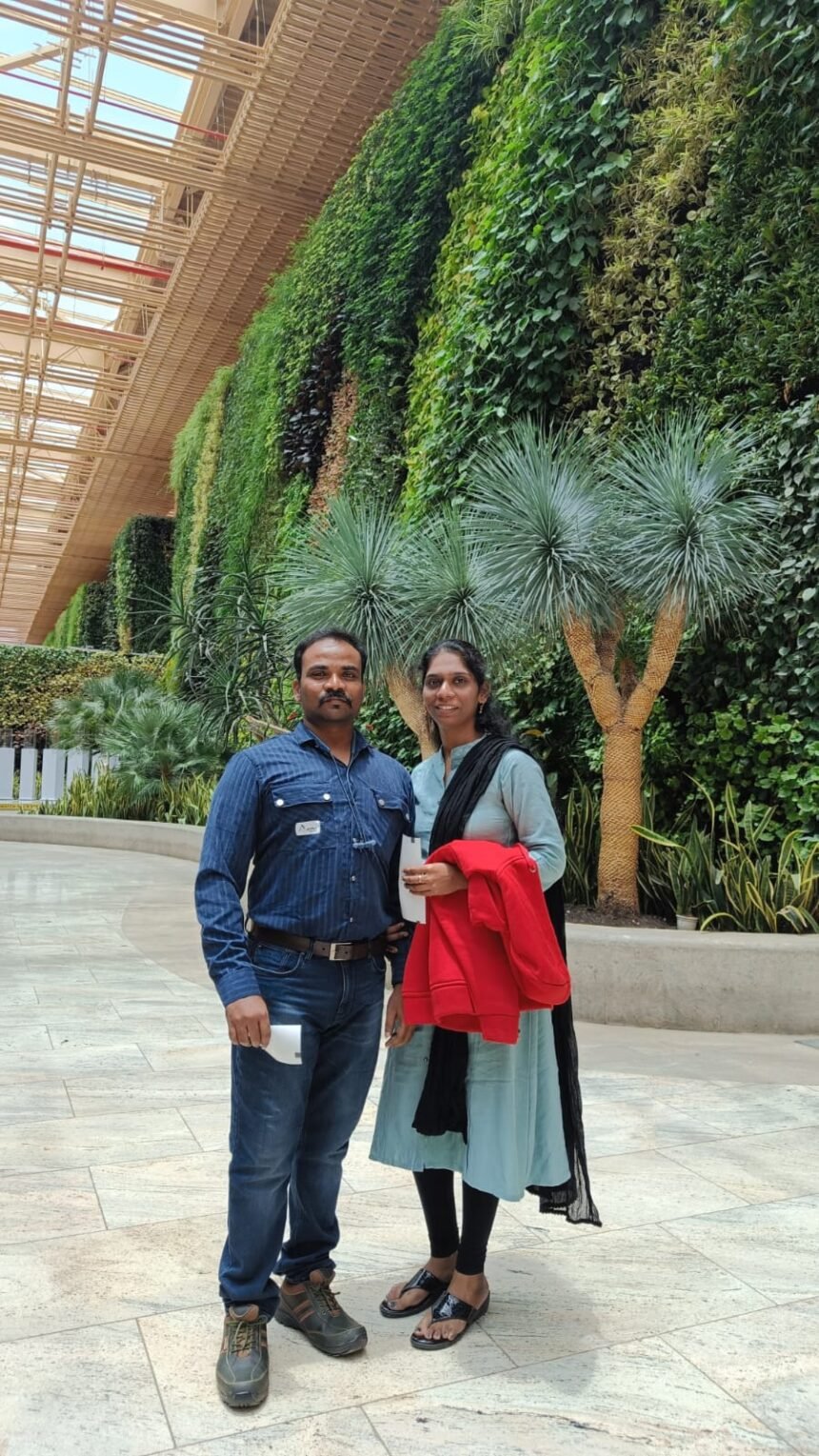
From traditional roots to a modern LLP structure, the founders are redefining scalability in the global hair industry
In today’s global economy, building a scalable business often begins with a simple but critical question: where does consistent demand exist?
For BaluKasipogu, founder of Tanori Hair, the answer came from observing both his roots and the limitations within them.
Raised in Chennai, Balu comes from a family of Achari craftsmentraditional blacksmiths and carpentersfor generations. While the legacy was built on discipline, precision, and hard work, he recognized a structural limitation in the business model itself.
Furniture, as he explains, is a longterm asset. Once purchased, customers typically do not return for another 10 to 15 years. This creates a lowfrequency demand cycle, limiting scalability and repeat business opportunities.
Instead of continuing along that path, Balu chose to explore industries driven by continuous demand. That exploration led him to fashionand more specifically, the global human hair market.
“Fashion has no endpoint,” he says. “Every year brings new demand, new trends, and new expectations.”
Despite having no prior background in the industry, Balu entered the market with a clear observation: while global demand for human hair was strong, trust and consistency were often lacking.
This gap became the foundation for Tanori Hair.
Built on the principles of ethical sourcing and reliable quality, the brand focuses on South Indian temple hairwidely regarded as one of the most premium raw materials in the global market. By combining traditional sourcing practices with modern processing and international trade expertise, the company positioned itself as a dependable partner for global buyers.
Initially launched as a proprietorship, the business was managed independently by Balu, who oversaw everything from sourcing to client relationships. However, as operations expanded, the need for a more structured and scalable model became evident.
This marked a significant turning point in the company’s journey.
His life partner, Soniya, joined the business as a partner, bringing a new level of strategic thinking, organization, and balance to the operations. With aligned vision and shared commitment, the duo transitioned the business into a Limited Liability Partnership (LLP)a move that strengthened governance, improved scalability, and set the stage for longterm growth.
The shift was not merely structural; it was strategic.
With clearly defined roles and a shared vision, the partnership enabled the company to streamline operations, enhance client servicing, and focus on global expansion with greater clarity.
Today, through Tanori Hair, the founders serve clients across the United States, Europe, Africa, and Asia, catering to professional stylists, salons, and distributors who prioritize consistency and trust.
Their growth reflects a broader trend in global markets, where reliability and transparency are increasingly valued alongside product quality.
For Balu, the journey also represents a balance between tradition and transformation.
While he chose not to continue his family’s traditional profession, he carried forward its core valuesdiscipline, craftsmanship, and integrityinto a modern, global business context.
“Respecting tradition doesn’t always mean following it,”
he notes. “Sometimes it means building something new with the same values.”
As Tanori Hair continues to expand its global footprint, the founders remain focused on strengthening their position in an industry defined by constant evolution.
In a space where trends change rapidly and demand never truly stops, their decision to build in a market without an endpoint may prove to be their most strategic advantage.
Quote
“Furniture is built to last for years. Fashion is built to evolve every year. I chose evolution”
“We didn’t just scale the businesswe restructured it for longterm growth.”
“Turning a life partnership into a business partnership brought clarity, balance, and direction.”