The Problem With Interior Design Isn’t Design
Why the journey from imagining a space to actually transforming it needs to change.
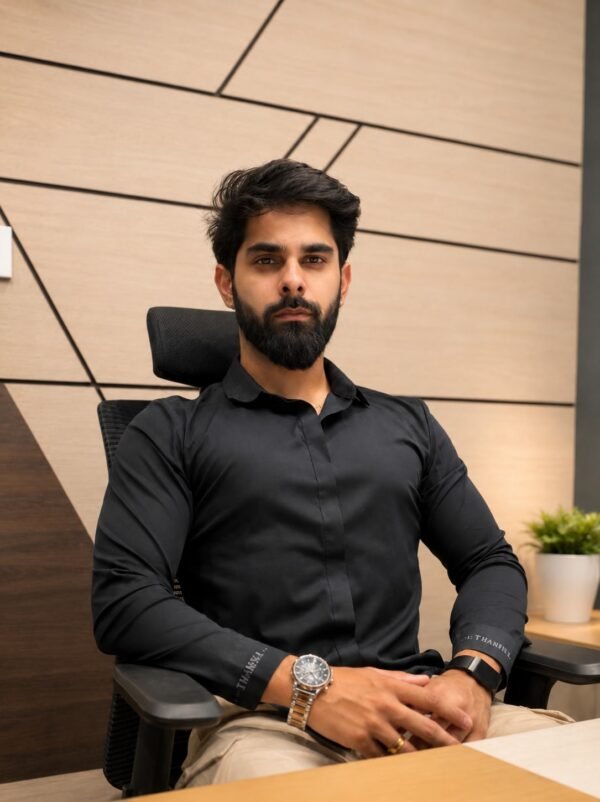
By Mayan Kumar, Founder & CEO, WallMantra
The problem with interior design isn’t design.
There is no shortage of great design today. Inspiration is everywhere. Instagram, Pinterest, magazines, architects, designers and brands have made it easier than ever to discover beautiful spaces.
The real problem begins when you want to make one of those spaces your own.
You may have saved hundreds of images. You may know the feeling you want — something warmer, more sophisticated, more personal or more functional. You may even have a very clear picture in your head.
But then comes the question:
Where do I actually start?
What works in my space?
Which materials should I choose?
Which products belong together?
Who can design it?
Who will make it?
Who will execute it?
Suddenly, something that began as inspiration becomes a fragmented journey.
You discover inspiration in one place, products somewhere else, a designer somewhere else, a contractor somewhere else — and eventually, you find yourself coordinating the entire process.
I believe this experience can be fundamentally different.
From products to possibilities
I’ve always been fascinated by the intersection of creativity and technology.
I’ve always enjoyed creating things that didn’t exist before — whether that meant building digital experiences, experimenting with technology, thinking differently about products, or simply imagining how an ordinary space could become something extraordinary.
That is what drew me deeper into WallMantra.
I didn’t see it simply as a home décor business.
I saw the possibility of building something much bigger.
For a long time, the home décor industry has largely been product-first.
You search for a painting.
You search for wallpaper.
You search for a sofa.
You search for a kitchen.
But people don’t really wake up wanting a wallpaper.
They want a beautiful room.
They don’t necessarily want a wall panel.
They want a wall that changes how the room feels.
They don’t simply want furniture.
They want a space that reflects who they are.
That distinction changed the way I started thinking about the entire industry.
Instead of asking:
“What product do you want?”
I believe we should start asking:
“What do you want your space to become?”
A different way to transform a space
This is where my idea of Space Transformation comes from.
Instead of beginning with thousands of products and asking people to figure everything out themselves, begin with the space.
Start with a wall.
A room.
An inspiration image.
Or simply an idea.
Then use design, technology, products and expertise to explore what that space could become.
At WallMantra, we’re building this around three simple stages:
Discover → Design → Transform
Discover what is possible.
Design something that belongs to you.
Transform the physical space.
Underneath those three stages is an ecosystem of products, materials, technology, design capabilities and execution.
But those are not the destination.
They are the ingredients.
The transformation is the outcome.
Technology should make creativity more accessible
I don’t believe technology should replace designers or creativity.
I believe it should amplify them.
AI can help people articulate what they want.
Visualisation can help people see an idea before they build it.
AR can help them understand how something might work in their actual environment.
Digital design can make professional capabilities accessible to people who may not otherwise know where to begin.
This is why we’re exploring experiences such as Grace, our AI design guide, alongside visualisation, Design Access and an increasingly integrated transformation journey.
But the goal isn’t to make the experience more technological.
The goal is to make it more human.
Technology should remove friction, not add complexity.
The future isn’t product versus design
I also don’t see D2C, design and execution as separate worlds.
They can become different layers of the same journey.
Someone may discover a beautiful room and simply want to buy the products.
Someone else may want that look adapted to their own home.
Another person may want someone to take responsibility for the transformation from concept to execution.
All three are legitimate needs.
The difference is simply how much of the journey the customer wants us to own.
That’s why we’re building experiences around different levels of involvement — from Shop the Look, to Design Access, to Transform With WallMantra.
The customer shouldn’t have to fit into our business model.
Our business model should adapt to what the customer needs.
But the bigger vision is beyond interiors
This is perhaps the part I care about most.
I don’t want to build just another interior company.
And I don’t want my journey to be defined simply by building another successful décor business.
I want to build at the intersection of:
Creativity.
Technology.
Design.
Products.
Human experience.
Because the spaces around us influence how we live and work.
And I believe there is an enormous opportunity to make the relationship between people and their spaces more intuitive, more personal and more inspiring.
What happens when technology helps you communicate what you imagine?
What happens when you can see possibilities before making decisions?
What happens when design, products and execution stop feeling like disconnected services and become one continuous experience?
That’s the future I find exciting.
The next chapter
WallMantra has already had a history as a home décor and D2C brand.
That history matters.
But I believe brands shouldn’t be limited by what they were.
They should be defined by what they have the courage to become.
The next chapter of WallMantra is about moving from selling individual pieces to helping people imagine and create something much bigger.
A wall.
A room.
A home.
And eventually, perhaps, an entirely different way of experiencing the spaces around us.
That’s the company I want to build.
Not simply a place to buy something for your home.
Not simply another design service.
But a place where you can start with an idea — even if you don’t know exactly what to do with it yet — and say:
“This is what I imagine. Now help me bring it to life.”
That, to me, is what Space Transformation is about.
Discover. Design. Transform.
— Mayan Kumar
Founder & CEO, WallMantra