Why Astrology Is Returning in the AI Era

As artificial intelligence makes life faster and more predictable, people are turning to an ancient system that addresses something technology still struggles to provide: meaning.
By Anmol Kapoor
For centuries, astrology has survived every intellectual revolution thrown at it. It endured the rise of modern science, the decline of royal courts, the expansion of industrial society and the arrival of the internet. Now, in the age of artificial intelligence, astrology is not disappearing. It is becoming visible again.
At first glance, the two worlds seem incompatible. Artificial intelligence represents data, speed, automation and prediction through algorithms. Astrology belongs to an older language of planets, cycles, symbols and human destiny. Yet both respond to the same need: the desire to understand patterns, reduce uncertainty and make sense of an unpredictable future.
This is one reason astrology is returning with renewed force.
For younger generations, astrology offers a vocabulary for uncertainty without demanding that every experience be reduced to a diagnosis, productivity target or measurable outcome. It allows reflection before reaction and perspective before decision.
Modern life has given people more information than ever before, but not necessarily more clarity. An individual can access financial data, health trackers, career advice, relationship content and endless psychological analysis within seconds. Still, the deeper questions remain unresolved. Why does success arrive easily for one person and late for another? Why do similar efforts produce different outcomes? Why do certain periods of life feel expansive while others become emotionally or professionally restrictive?
Artificial intelligence can process information, but people continue to search for meaning.
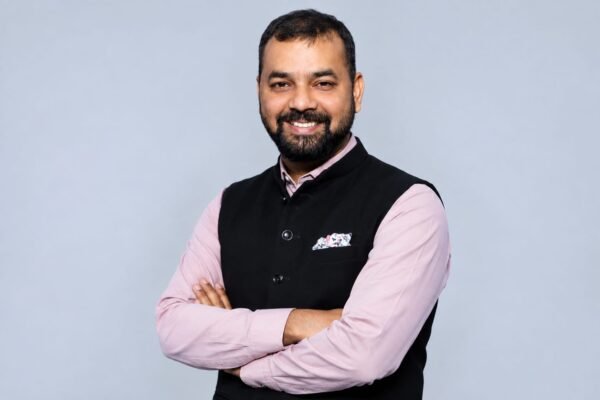
Vedic astrologer and researcher Anmol Kapoor believes this distinction is central to astrology’s renewed relevance. Technology may identify behavioural patterns, calculate probabilities and organise vast amounts of knowledge, but astrology attempts to place an individual’s experiences within a larger framework of time. It does not merely ask what may happen. At its best, it asks why a particular phase is unfolding and how a person should respond to it.
That difference matters.
The renewed interest in astrology is also connected to personalisation. The digital world has trained people to expect experiences tailored to them. Entertainment platforms recommend what to watch. Shopping apps predict what to buy. Social media decides what appears on a screen. Astrology, however, offered personalisation thousands of years before algorithms. A birth chart is not a general message for twelve zodiac signs. It is a complex map built from the exact date, time and place of birth.
This is where traditional astrology and modern technology can complement each other.
AI can make calculations faster, preserve classical texts, compare charts, organise research and help students access knowledge that was once difficult to obtain. But speed should not be confused with wisdom. An astrological chart cannot be responsibly interpreted by combining a few planetary keywords. Context, life circumstances, cultural understanding, timing systems and human judgement remain essential.
Kapoor’s work in astrology and digital education reflects this balance. Through AK Astrology TV and Orca, his astrology platform, he has argued that the future of astrology lies neither in rejecting innovation nor in surrendering completely to it. The real opportunity is to use technology as an instrument while preserving the depth, discipline and ethical responsibility of Jyotish.
This approach is particularly important because the internet has also encouraged superficial astrology. Short videos often reduce complex planetary combinations to dramatic promises about wealth, marriage or sudden success. Such content may attract attention, but it can weaken public trust. The return of astrology in the AI era will therefore depend on whether serious practitioners can distinguish genuine interpretation from automated certainty.
Astrology should not compete with science, psychology or technology. Nor should it pretend to replace professional advice in matters of health, law or finance. Its value lies elsewhere. It gives people a symbolic and time-based framework through which they can reflect on temperament, recurring patterns, strengths, vulnerabilities and important transitions.
In that sense, astrology’s revival is not a rejection of modernity. It is a response to one of modernity’s greatest limitations: the assumption that more data automatically creates more understanding.
The AI era may make the world more efficient, but efficiency alone cannot answer questions of purpose, timing, fear, loss, ambition or destiny. Those questions remain deeply human.
Perhaps astrology is returning because, in a world increasingly shaped by machines, people are again searching for a language that speaks to the soul.