Why Students From Tier-2 and Tier-3 Cities Are Changing India’s Law Entrance Landscape
India’s law entrance ecosystem is undergoing a quiet but significant transformation. For years, serious preparation for examinations such as the Common Law Admission Test (CLAT) was concentrated largely in metropolitan cities and a handful of established coaching hubs. Today, that pattern is changing rapidly.
A growing number of aspirants from Tier-2 and Tier-3 cities are not merely participating in national law entrance examinations; they are becoming increasingly competitive, better informed and more ambitious about gaining admission to leading National Law Universities.
This shift has important implications for legal education, test preparation and the broader education industry.
One of the biggest reasons behind this change is the democratisation of access to information. A student in Bhopal, Indore, Jaipur, Ranchi or another emerging education centre no longer needs to relocate to Delhi or another major city simply to understand how CLAT works. Online classes, digital study material, mock tests, mentorship programmes and educational content have reduced the information gap that once separated metropolitan students from the rest of the country.
However, access to content alone does not explain the transformation.
What has changed more fundamentally is aspiration.
Law is increasingly being viewed as a serious first-choice career by students outside metropolitan centres. Awareness regarding National Law Universities, corporate law, litigation, judicial services, public policy, academia, technology law and international legal careers has expanded considerably.
Earlier, many students encountered law as a career option relatively late. Today, students in Class 11 and 12 are actively planning for law entrance examinations, comparing universities and following legal developments months or even years before sitting for CLAT.
This creates a different kind of aspirant: younger, better informed and prepared to compete nationally.
The rise of specialised online education has also weakened the traditional geographical advantages enjoyed by established coaching hubs. A student can now attend live classes, analyse national-level mock tests and interact with mentors without leaving his or her hometown.
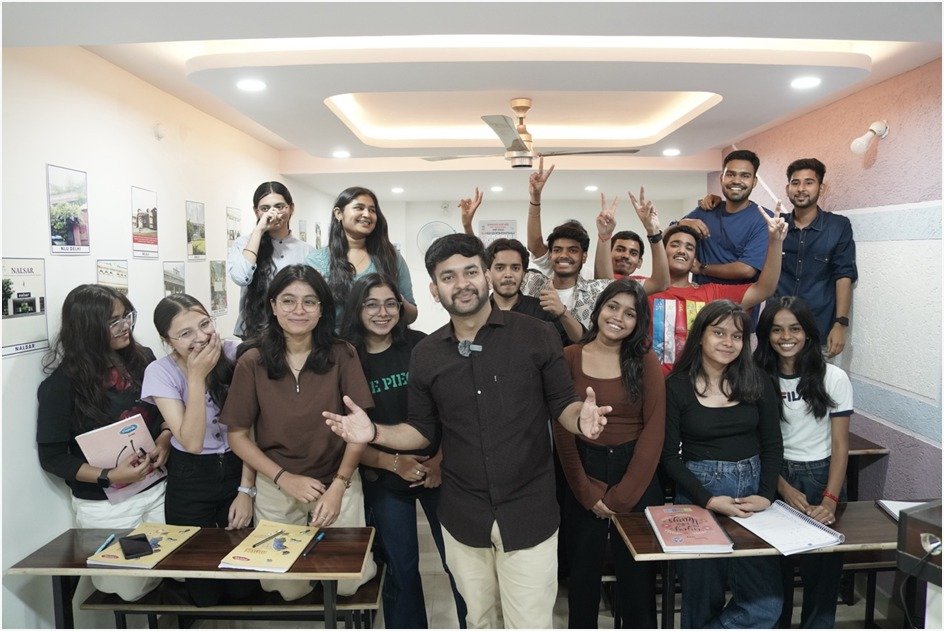
At GK Infinity, while working closely with CLAT aspirants from different backgrounds, I have observed that geography is becoming a much weaker predictor of preparedness than it once was. Students from smaller cities frequently demonstrate strong academic discipline, competitiveness and willingness to improve once they receive appropriate exposure, structure and mentorship.
Yet access to classes is only one part of the equation.
A major challenge for many aspirants is the absence of a serious preparation environment. Students may have access to excellent lectures but still struggle with consistency, distractions, irregular routines, inadequate peer competition or poor test analysis.
This is one of the reasons we developed GKI Home, GK Infinity’s residential CLAT preparation programme in Bhopal.
The idea behind the programme was not simply to provide accommodation alongside coaching. The larger objective was to create a structured academic environment where preparation extends beyond classroom hours. Students live within an ecosystem built around scheduled classes, self-study, sectional testing, current affairs preparation, revision, mentorship and peer competition.
The residential model also reflects a broader shift taking place in Tier-2 education centres.
Students no longer necessarily need to migrate to traditional coaching cities to access an intensive preparation environment. A city such as Bhopal can combine the accessibility and relatively lower pressure of a Tier-2 city with the academic structure traditionally associated with major examination hubs.
In programmes such as GKI Home, the value proposition therefore goes beyond content delivery. It attempts to solve another problem increasingly visible in competitive examination preparation: accountability.
A student may know exactly what needs to be studied but still fail to execute the plan consistently. Structured routines, supervised study, regular testing and immediate academic feedback can therefore become as important as the lecture itself.
This also explains why hybrid education models are likely to play a major role in the next phase of test preparation.
Digital learning provides accessibility and scale. Offline classrooms provide interaction. Residential ecosystems add routine, peer competition and continuous academic engagement. The combination of these models can be especially relevant for serious aspirants coming from cities where specialised CLAT preparation infrastructure has historically been limited.
There is also an important misconception that students from Tier-2 and Tier-3 cities require fundamentally different academic content.
They generally do not.
The examination is the same. The standard required is the same. What often differs is exposure.
A student may possess excellent reasoning ability but may never have encountered sophisticated reading material. Another may be academically strong but unaware of the level at which students nationally are competing. Others may simply lack a peer group where law entrance preparation is treated seriously.
Therefore, the real educational challenge is no longer merely delivering lectures. It is building an environment that provides benchmarking, mentorship, disciplined practice and constant feedback.
For education companies, this represents a significant change in how the CLAT preparation market should be understood.
The next phase of growth may not come only from opening larger centres in India’s biggest metropolitan cities. It may increasingly come from creating specialised academic ecosystems in cities that were previously considered secondary education markets.
Students from these cities are already changing the competitive culture of entrance examinations. They are comfortable using technology, accessing national resources and competing far beyond their immediate surroundings.
The result is a gradual erosion of the assumption that elite educational opportunities belong disproportionately to students from a small number of urban centres.
For the legal education ecosystem, this is an important development.
National Law Universities attract students from across the country. A geographically broader pool of well-prepared aspirants can contribute to greater diversity of experiences, perspectives and backgrounds within law schools.
The larger lesson is simple: talent was never confined to metropolitan India. Access, exposure and preparation infrastructure often were.
As digital education, specialised mentoring and models such as residential preparation continue to expand into Tier-2 and Tier-3 cities, the distinction between a “metro aspirant” and a “small-city aspirant” is likely to become increasingly irrelevant.
The students emerging from these cities are no longer entering the law entrance landscape from its margins.
They are increasingly helping redefine its centre.
About the Author:
Prakhar Mishra is the Founder of GK Infinity, a CLAT and law entrance preparation platform based in Bhopal. Through online programmes, offline preparation and the residential initiative GKI Home, he works with law aspirants on structured preparation, mentorship, testing and academic discipline.