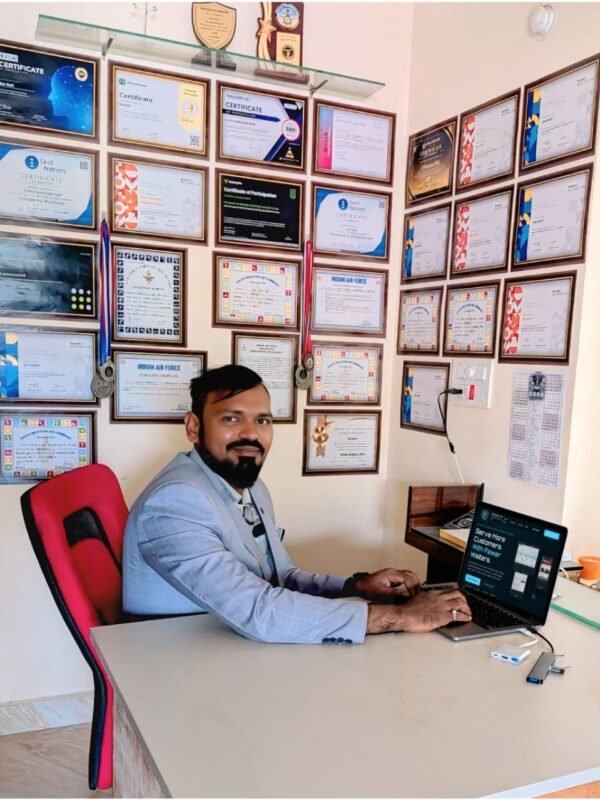
Chandrakant Kejriwal Explains Why Most DI Fittings Problems Begin Before Material Reaches the Site

In water infrastructure projects, most people notice a problem only when work stops at site. A flange pipe does not align. A DI fitting does not match the joint requirement. A gasket is missing. The coating is damaged. A pressure class is misunderstood. Suddenly, installation slows down, labour waits, machinery stands idle, and the project team begins searching for answers.
According to Chandrakant Kejriwal of Chandranchal Group, many of these problems do not begin at the site. They begin much earlier, during enquiry, BOQ interpretation, drawing approval, product selection, and dispatch planning.
“By the time material reaches site, the mistake may already be too expensive to correct,” says Chandrakant Kejriwal, who works closely with buyers and contractors dealing in DI fittings, flange pipes, ductile iron fittings, water pipeline fittings, sewage pipeline fittings, valves, rubber gaskets, bolts, and other project-critical pipeline components.
In India’s growing water infrastructure sector, EPC contractors, municipal project teams, and large infrastructure companies are increasingly working under pressure. Projects related to water supply, sewage treatment, wastewater management, industrial pipelines, and urban pipeline networks demand speed, accuracy, and dependable material supply. But Chandrakant believes that speed without technical clarity often creates more risk than progress.
One of the most common mistakes, he says, is treating a BOQ as a shopping list. A BOQ may mention DI bend, DI tee, reducer, flange pipe, DI flange pipe, or ductile iron pipe fitting, but the item name alone is not enough. The actual requirement depends on joint type, pressure rating, flange drilling, coating, lining, gasket compatibility, bolt requirement, and site application.
“A DI fitting is not just a product. It is a connection point. And connection points are where many pipeline problems begin,” Chandrakant explains.
This is especially important in flange pipes and ductile iron flange pipes. On paper, a flange pipe may look simple. But before ordering, buyers must check flange drilling, pressure class, face-to-face length, bolt hole alignment, gasket requirement, coating and lining, and whether the pipe will connect correctly with valves, pumps, chambers, bends, reducers, or other pipeline fittings on site.
A common industry assumption is that if the size is correct, the material is correct. Chandrakant disagrees. The same nominal size can still differ in pressure rating, jointing arrangement, flange standard, coating requirement, and installation suitability. For EPC buyers searching for DI fittings suppliers or flange pipe manufacturers, this difference matters.
“Available material and suitable material are not the same thing,” he says. “Fast supply is useful only when the material is technically right for the project.”
Another overlooked area is accessories. In many water pipeline and sewage pipeline projects, small components like rubber gaskets, bolts, nuts, washers, and coating condition are treated as secondary. But these details often decide whether installation goes smoothly or leakage begins later. A damaged gasket, wrong bolt set, poor storage, or unclear marking can create unnecessary site confusion.
Chandranchal Group works in a segment where product accuracy and project understanding must go together. For buyers looking for DI fittings, ductile iron fittings, flange pipes, DI flange pipes, double flanged pipes, water pipeline fittings, sewage pipeline fittings, and industrial pipeline components, Chandrakant Kejriwal believes the conversation should begin before the purchase order is released.
His advice to EPC contractors is simple: do not wait for installation day to discover technical gaps. Before finalising material, check five things clearly: application, joint type, pressure class, coating and lining, and accessories. For special items, always confirm the drawing before manufacturing or dispatch.
He also believes procurement and site teams must communicate more closely. Procurement may focus on rate, delivery, and supplier comparison. Site teams focus on fitment, installation, and execution. When these two conversations happen separately, the project carries hidden risk.
“In water infrastructure projects, the right material is not only the material that reaches fast. It is the material that reaches with clarity,” Chandrakant says.
As India continues to invest in water supply, wastewater, sewage, and pipeline infrastructure, the demand for reliable DI pipe fittings, ductile iron fittings, flange pipes, and project-ready pipeline components will keep growing. But the companies that benefit most will be the ones that understand the full chain from BOQ to drawing, from manufacturing to dispatch, and from site receipt to installation.
For Chandrakant Kejriwal and Chandranchal Group, the message is clear: most DI fittings problems can be prevented before material reaches the site — if buyers ask the right questions early enough.