


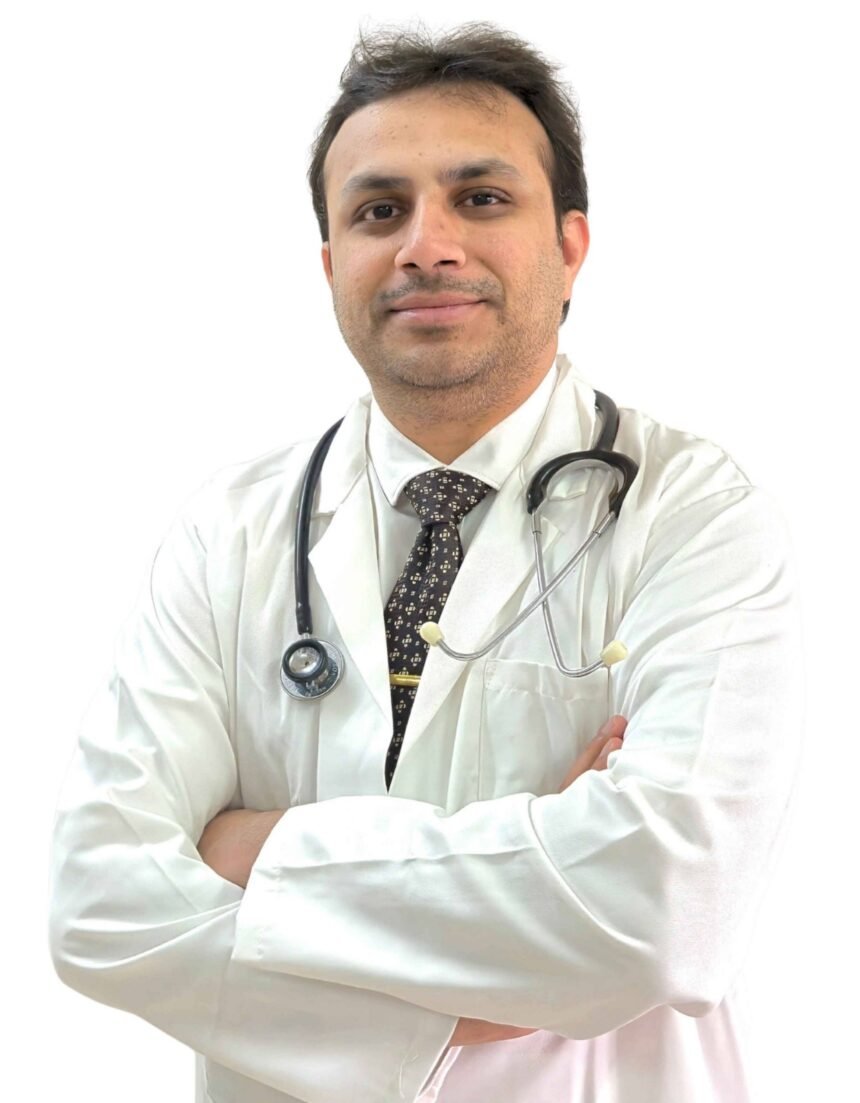
Mumbai: With growing patient demand for faster recovery and less invasive orthopedic procedures, Dr. Mayur Rabhadiya, Orthopedic& Joint Replacement Surgeon, has built a focused practice around minimally invasive, muscle-sparing robotic knee and hip replacement, along with biologic knee therapies such as GFC treatment.
Dr. Rabhadiya, trained in robotic and computer-navigated joint replacement, practices in Ghatkopar, Mumbai. His surgical philosophy centers on precision alignment, soft tissue preservation, and early functional recovery.
Minimally Invasive Robotic Knee Replacement Using Mini-Subvastus Approach
Dr. Mayur Rabhadiya performs robotic knee replacement using a mini-subvastus, muscle-sparing technique. Unlike conventional approaches that involve splitting or everting the quadriceps mechanism, the mini-subvastus approach preserves the extensor apparatus by accessing the knee joint beneath the vastus medialis muscle.
Key surgical principles include:
- Preservation of quadriceps muscle integrity
- Smaller incision and limited soft tissue disruption
- Robotic-assisted precision bone cuts
- Real-time ligament balancing
- Accurate restoration of limb alignment
By combining a muscle-sparing exposure with robotic alignment control, the objective is to reduce postoperative pain, enable early mobilization, and shorten hospital stay.
According to Dr. Rabhadiya, muscle preservation plays a critical role in rapid recovery. When the extensor mechanism remains intact, patients often demonstrate earlier straight-leg raising and improved functional rehabilitation.
He notes that while physiotherapy remains important, many patients undergoing minimally invasive robotic knee replacement require shorter and less intensive rehabilitation protocols compared to traditional techniques.
Mini-Incision Robotic Hip Replacement with Rapid Recovery Focus4
In hip replacement surgery, Dr. Mayur Rabhadiya employs mini-incision, muscle-sparing techniques integrated with robotic assistance.
Robotic hip replacement allows:
- Preoperative digital planning based on patient anatomy
- Precise acetabular cup positioning
- Controlled femoral preparation
- Accurate restoration of leg length and offset
Minimally invasive exposure reduces soft tissue trauma, which may translate into:
- Reduced postoperative pain
- Early weight-bearing
- Shorter hospital stay
- Accelerated return to daily activities
He emphasizes that rapid recovery is not solely dependent on incision length but on comprehensive perioperative planning, including anesthesia protocols, blood management, and early mobilization strategies.
GFC Therapy for Early Knee Arthritis and Joint Preservation
Beyond joint replacement, Dr. Mayur Rabhadiya offers Growth Factor Concentrate (GFC) therapy as a biologic treatment option for selected patients with early-stage knee arthritis.
GFC therapy involves concentrating growth factors derived from the patient’s blood and injecting them into the affected joint to potentially support tissue healing and symptom relief.
It is considered in:
- Early osteoarthritis without major deformity
- Persistent knee pain not responding to conservative therapy
- Patients seeking joint preservation strategies
Dr. Rabhadiya clarifies that biologic therapy is not a substitute for knee replacement in advanced arthritis. Instead, it may serve as an adjunctive option when structural damage is limited and alignment remains preserved.
A Precision-Focused Orthopedic Practice
Dr. Mayur Rabhadiya’s practice in Mumbai reflects a focused integration of:
- Minimally invasive muscle-sparing techniques
- Robotic precision in knee and hip replacement
- Rapid recovery protocols
- Evidence-based biologic joint preservation
As patient expectations shift toward shorter hospital stays and faster functional return, minimally invasive robotic joint replacement combined with structured recovery pathways is increasingly shaping modern orthopedic care.
In Mumbai’s evolving orthopedic landscape, Dr. Mayur Rabhadiya continues to position precision, muscle preservation, and data-guided surgery at the center of his joint replacement practice.